• Skip to content
  • Skip to primary sidebar
  • Skip to footer

Header Right

  • Home
  • About
  • Contact

John Sanchez

Benefits of the ERTC

April 29, 2022 by John Sanchez

In response to the COVID-19 pandemic, congress passed several broad-sweeping legislative initiatives. Starting in March of 2020, the CARES Act was passed providing small businesses economic relief nationwide. Among the initiatives included in the legislation was the Paycheck Protection Program (PPP) and the Employee Retention Tax Credit (ERTC). Both initiatives were intended to encourage business owners to keep employment rolls active to avoid the likely tsunami of unemployment claims, further impacting the overall economy.

Benefits of the ERTC

Many business owners were uninformed on the benefits of the ERTC primarily due to Congress’ initial ban on availing of both programs. Initially, Congress denied business owners who took a PPP loan to also avail themselves of the ERTC. After all, faced with the option of practically ‘Free’ money (PPP), why consider the lesser appealing ERTC.

Until 9 months later. On December 27th, Congress passed the Consolidated Appropriations Act (CAA) which made some retroactive changes to the Cares Act ERTC provisions. Among those being allowing business owners who took a PPP loan to also avail themselves of the ERTC. However, with one caveat. Wages used to claim PPP forgiveness could not also be used to claim ERTC.

So how can you determine if you qualify? Well, depends on which year your referring to. Read on..

Different rules for Different Years

For 2020, the eligibility rules are as follows:

  • Eligibility qualifications:
    • Business had a >50% reduction in Gross Receipts compared to same quarter in 2019, or
    • Business operations were fully or partially suspended due to a government mandated order  (More on this later.)
  • Credit is 50% of up to $10,000 of qualified wages per employee for the entire year ($5k max per employee for 2020)

For 2021, the eligibility rules get better:

  • Eligibility qualification:
    • Business had a >20% reduction in Gross Receipts (Big Difference from 2020 rules) compared to same quarter in 2019. This assessment could alternatively use the immediately preceding quarter compared to same quarter in 2019.
    • Business operations were fully or partially suspended due to a government mandated order 
  • Credit is 70% of up to $10,000 of qualified wages per employee PER QUARTER (Big difference from 2020 rules). 

Is the calculation that simple?

While the ERTC calculation for eligible wages is simple, determining eligible ERTC wages can be complex. Due to the inability to claim same wages for PPP loan forgiveness, the ERTC wage eligibility must be determined at the employee level individually. Also keeping in mind that the ERTC eligibility is determined by QUARTER. While PPP forgiveness wages, paid during the PPP Covered Period, can span more than 1 quarter. One can easily see how complex the exercise to determine eligible wages can be. In addition, keeping audit ready records of how eligible wages were determined is critical as these amended payroll tax form filings are auditable for up to 6 years.

What is considered partial suspension of operations?

Many states and local government units have issued full or partial closures of certain non-essential businesses. For many business owners, state mandated closure or suspension of non-essential procedures. Since instances like these could fall under the ‘Partial suspension of operations’, many business owners may qualify for ERTC if they fail to meet the reduction in gross receipts test.

Does the ERTC need to be repaid?

Unlike the PPP loan, the ERTC is a payroll tax credit which is claimed by filing an amended 941-X for the appropriate quarter. The IRS will issue a refund check for the amount of the ERTC claimed. At the time of this article, ERTC refunds have been taking anywhere from 6-9 months.

Since most many businesses, in the authors experience, are most likely to be eligible for the ERTC for the 2nd or 3rd quarter of 2020 time is of the essence to claim the credit as the window is closing to amend these 941 filing in mid to late 2023.

Is the ERTC Taxable income?

Well, no. but kind of.

For those quarters which an ERTC is claimed, business owners will need to reduce wage expenses by the ERTC. In short, if you are filing for ERTC claim for 2Q 2020 you will most likely need to amend your business tax return to REDUCE wage expense. The reduction will consequently increase your taxable net income thus creating a taxable event. Despite the tax consequences of claiming the ERTC, most situations prove the cash flow positive benefits outweigh the cost.

The Employee Retention Credit cannot be overlooked as another potential opportunity to improve the working capital for your business, enabling further growth and financial strength to move ahead into 2022.

The ERTC-Experts team at John A Sanchez & Company have been helping dozens of business owners claim the Employee Retention Credit. To date, we’ve helped business owners claim over $1 million in ERTC funds helping to strengthen their working capital and enabling their businesses to thrive.

To explore how our ERTC-Experts team can help your business, find us at www.ERTC-Experts.com for more information and resources on the ERTC. While you’re there, apply for a no cost evaluation to determine if you qualify.

If you have questions, don’t hesitate to contact me.

Filed Under: Business, ERTC Tagged With: ERTC

Health Savings Accounts and more tax-saving tips

April 13, 2022 by John Sanchez

Health Savings Accounts: The Ultimate Retirement Account

Health Savings Accounts

It isn’t easy to make predictions, especially about the future. But there is one prediction we’re confident in making: you will have substantial out-of-pocket expenses for health care after you retire. Personal finance experts estimate that an average retired couple age 65 will need at least $300,000 to cover health care expenses in retirement.

You may need more.

The time to save for these expenses is before you reach age 65. And the best way to do it may be a Health Savings Account (HSA). After several years, you could have a fat HSA balance that will help pave your way to a comfortable retirement.

Not everyone can have an HSA. But you can if you’re self-employed or your employer doesn’t provide health benefits. Some employers offer, as an employee fringe benefit, either HSAs alone or HSAs combined with high-deductible health plans.

An HSA is much like an IRA for health care. It must be paired with a high-deductible health plan with a minimum annual deductible of $1,400 for self-only coverage ($2,800 for family coverage). The maximum annual deductible must be no more than $7,050 for self-only coverage ($14,100 for family coverage).

An HSA can provide you with three tax benefits:

  1. You or your employer can deduct the contributions, up to the annual limits.
  2. The money in the account grows tax-free (and you can invest it in many ways). 
  3. Distributions are tax-free if used for medical expenses. 

No other tax-advantaged account gives you all three of these benefits. 

You also have complete flexibility in how to use the account. You may take distributions from your HSA at any time. But unlike with a traditional IRA or 401(k), you do not have to take annual required minimum distributions from the account after you turn age 72. 

Indeed, you need never take any distributions at all from your HSA. If you name your spouse the designated beneficiary of your HSA, the tax code treats it as your spouse’s HSA when you die (no taxes are due). 

If you maximize your contributions and take few distributions over many years, the HSA will grow to a tidy sum. 


Partnership with Multiple Partners: The Good and the Bad


The generally favorable federal income tax rules for partnerships are a common reason for choosing to operate as a partnership with multiple partners instead of as a corporation with multiple shareholders. The most important partnership tax benefit rules can be summarized as follows: 

  • You get pass-through taxation. 
  • You can deduct partnership losses (within limits).
  • You may be eligible for the Section 199A tax deduction. 
  • You get basis from partnership debts. 
  • You get basis step-up for purchased interests. 
  • You can make tax-free asset transfers with the partnership.
  • You can make special tax allocations. 

Partnership taxation is not all good stuff. There are a few important disadvantages and complications to consider:

  • Exposure to self-employment tax
  • Complicated Section 704(c) tax allocation rules
  • Tricky disguised sale rules
  • Unfavorable fringe benefit tax rules

Limited partnerships are obviously treated as partnerships for federal income tax purposes, with the generally favorable partnership taxation rules mentioned above.

Limited partners generally are not exposed to liabilities related to the partnership or its operations. So, you generally cannot lose more than what you’ve invested in a limited partnership—unless you guarantee partnership debt. 

So far, so good. But you must also consider the following disadvantages for limited partners:

  • Limited partners usually get no basis from partnership liabilities. 
  • Limited partners can lose their liability protection. 
  • You need a general partner. 

On the plus side, limited partners have a self-employment tax advantage.

Since your partnership will have multiple partners, multiple issues can come into play. You’ll need a carefully drafted partnership agreement to handle potential issues even if you don’t expect them to arise. For instance, you may want to include

  • a partnership interest buy-sell agreement to cover partner exits;
  • a non-compete agreement (for obvious reasons);
  • an explanation of how tax allocations will be calculated in compliance with IRS regulations;
  • an explanation of how distributions will be calculated and when they will be paid (for instance, you may want to call for cash distributions to be made annually in early April to cover partners’ tax liabilities from their shares of partnership income for the previous year);
  • guidelines for how the divorce, bankruptcy, or death of a partner will be handled;
  • and so on. 

Key point. No type of entity (including a limited partnership in which you are a limited partner) will protect your personal assets from exposure to liabilities related to your own professional malpractice or your own tortious acts. 


Send Tax Documents Correctly to Avoid IRS Trouble


You have heard the horror stories about mail sent to the IRS that remains unanswered for months. Reportedly, the IRS has mountains of unanswered mail pieces in storage trailers, waiting for IRS employees to process them.

Because the understaffed IRS is having so much trouble processing all the documents it receives, you need to protect yourself when you send an important tax filing due by a specific deadline.

If you can file a document electronically, do so. The IRS deems such filings as filed on the date of the electronic postmark.

If you must file a physical document with the IRS, don’t use regular U.S. mail, Priority Mail, or Express Mail.

Why not?

When you mail a document with these methods, the IRS considers it filed on the postmark date, but only if the IRS receives it. What if the U.S. Postal Service doesn’t deliver it or the IRS loses it? You’ll have no way to prove the IRS got it—and the IRS and most courts won’t accept your testimony that it was timely mailed.

Don’t take this chance. Instead, file physical documents by certified or registered U.S. mail, or use an IRS-approved private delivery service (generally, two-day or better service from FedEx, UPS, or DHL Express). When you do this, the IRS considers the document filed on the postmark date whether or not the IRS receives it. 

Make sure to keep your receipt.


Tax Implications When Your Vacation Home Is a Rental Property

Health Savings Accounts and more saving tips, home for rental

If you have a home that you both rent out and use personally, you have a tax code-defined vacation home.

Under the tax code rules, that vacation home is either

  • a personal residence or
  • a rental property.

The tax code classifies your vacation home as a rental property if

  • you rent it out for more than 14 days during the year, and
  • your personal use during the year does not exceed the greater of (a) 14 days or (b) 10 percent of the days you rent the home out at fair market rates.

Count actual days of rental and personal use. Disregard days of vacancy, and disregard days that you spend mainly on repair and maintenance activities.

For vacation homes that are classified as rental properties, you must allocate mortgage interest, property taxes, and other expenses between rental and personal use, based on actual days of rental and personal occupancy. 


Mortgage Interest Deductions 


Mortgage interest allocable to personal use of a rental property does not meet the definition of qualified residence interest for itemized deduction purposes. The qualified residence interest deduction is allowed only for mortgages on properties that are classified as personal residences. 


Schedule E Losses and the PAL Rules


When allocable rental expenses exceed rental income, a vacation home classified as a rental property can potentially generate a deductible tax loss that you can claim on Schedule E of your Form 1040. Great!

Unfortunately, your vacation home rental loss may be wholly or partially deferred under the dreaded passive activity loss (PAL) rules. Here’s why. 

You can generally deduct passive losses only to the extent that you have passive income from other sources (such as rental properties that produce positive taxable income). 

Disallowed passive losses from a property are carried forward to future tax years and can be deducted when you have sufficient passive income or when you sell the loss-producing property. 


“Small Landlord” Exception to PAL Rules


A favorable exception to the PAL rules currently allows you to deduct up to $25,000 of annual passive rental real estate losses if you “actively participate” and have adjusted gross income (AGI) under $100,000. The $25,000 exception is phased out between AGI of $100,000 and $150,000.


The Seven-Days-or-Less and Less-Than-30-Days Rules 


The IRS says the $25,000 small landlord exception is not allowed

  • when the average rental period for your property is seven days or less, or
  • when the average period of customer use for such property is 30 days or less, and significant personal services are provided by or on behalf of the owner of the property in connection with making the property available for use by customers. 

“Real Estate Professional” Exception to PAL Rules 


Another exception to the PAL rules currently allows qualifying individuals to deduct rental real estate losses even though they have little or no passive income. To be eligible for this exception, 

  1. you must spend more than 750 hours during the year delivering personal services in real estate activities in which you materially participate, and 
  2. those hours must be more than half the time you spend delivering personal services (in other words, working) during the year. If you can clear those hurdles, you qualify as a real estate professional. 

The second step is determining whether you have one or more rental real estate properties in which you materially participate. If you do, those properties are treated as non-passive and are therefore exempt from the PAL rules. That means you can generally deduct losses from those properties in the current year.


Meeting the Material Participation Standard 


The three most likely ways to meet the material participation standard for a vacation home rental activity are when the following occur:

  • You do substantially all the work related to the property.
  • You spend more than 100 hours dealing with the property, and no other person spends more time on this property than you do.
  • You spend more than 500 hours dealing with the property.

In attempting to clear one of these hurdles, you can combine your time with your spouse’s time. But if you use a management company to handle your vacation home rental activity, you’re unlikely to pass any of the material participation tests.

If you have questions, don’t hesitate to contact me.

Filed Under: Tax update, Tax-saving tips, Tax-savings Tagged With: Tax-saving, Tax-saving tips

IRAs for Kids, and more tax saving tips

March 14, 2022 by John Sanchez

Child saves money, IRAs for Kids

IRAs for Kids

Working at a tender age is an American tradition. What isn’t so traditional is the notion of kids contributing to their own IRA, especially a Roth IRA. But it should be a tradition, because it’s a really good idea. 

Here’s what you need to know about IRAs for kids. Let’s start with the Roth IRA option. 

Roth IRA Contribution Basics 

The only federal-income-tax-law requirement for a child to make an annual Roth IRA contribution is to have enough earned income during the year to cover the contribution. Age is completely irrelevant. 

So if a child earns some cash from a summer job or part-time work after school, he or she is entitled to make a Roth contribution for that year. 

For both the 2021 and 2022 tax years, your working child can contribute the lesser of

  • his or her earned income for the year, or 
  • $6,000. 

While the same $6,000 contribution limit applies equally to Roth IRAs and traditional IRAs, the Roth option is usually better for kids.

Key point. A contribution for your child’s 2021 tax year can be made as late as April 15, 2022. So, there’s still time for that.

Modest Contributions to Child’s Roth IRA Can Amount to Big Bucks by Retirement Age

By making Roth contributions for a few years during the teenage years, your kid can potentially accumulate quite a bit of money by retirement age. 

But realistically, most kids won’t be willing to contribute the $6,000 annual maximum even when they have enough earnings to do so. 

Say the child contributes $2,500 at the end of each year for four years. Assuming a 5 percent annual rate of return, the Roth account would be worth about $82,000 in 45 years. Assuming a more optimistic 8 percent return, the account value jumps to a whopping $259,000. Wow! 

You get the idea. With relatively modest annual contributions for just a few years, Roth IRAs can be worth eye-popping amounts by the time your “kid” approaches retirement age.

Vacation Home Rental—What’s Best for You: Schedule C or E?

Vacation Home Rental

Do you have a beach or mountain home that you rent out?

If the average period of rental is less than 30 days, you likely have a choice—either

  • claim the income and expenses on Schedule C, or
  • claim the income and expenses on Schedule E.

When Is Schedule C a Good Choice?

If you show a tax loss on your rental property, Schedule C is a great choice because it allows you to deduct your rental losses against all other income (assuming you materially participate in the rental property).

If you show taxable income on the rental property, Schedule C is not good because it causes you to pay self-employment taxes.

When Is Schedule E a Good Choice?

If you show taxable income on the transient rental, Schedule E is best because you don’t pay any self-employment taxes on Schedule E income.

If you show a loss on your transient rental and you materially participate, you can deduct your losses against all other income, but those Schedule E losses do not reduce self-employment income.

Okay, now you know how to play the game.

IRS in Summary Mode

In recent advice, the IRS stated that rentals of living quarters are not subject to self-employment tax when no services are rendered for the occupants.

But if services are rendered for the occupants, and the services rendered

  1. are not clearly required to maintain the space in a condition for occupancy, and 
  2. are of such a substantial nature that the compensation for these services can be said to constitute a material portion of the rent, 

then the net rental income received is subject to the self-employment tax.

Entertainment Facility: Perk for You, Your Net Worth, and Your Employees

Imagine this: your Schedule C business buys a home at the beach, uses it solely as an entertainment facility for business, pays off the mortgage, and deducts all the expenses. 

Now say, 10 years later, without any tax consequence to you, you start using the beach home as your own.

Is this possible? Yes. Are there some rules on this? Yes. Are the rules difficult? No.

Okay, so could you achieve the same result if you operate your business as a corporation? Yes, but the corporation needs to rent the property from you or reimburse you for the facility costs, including mortgage interest and depreciation—because you want the title to always be in your name, not the corporation’s name.

The beach home, ski cabin, or other entertainment facility must be primarily for the benefit of employees other than those who are officers, shareholders, or other owners of a 10 percent or greater interest in the business, or other highly compensated employees. In this situation, you create

  • 100 percent entertainment facility tax deductions for the employer (you or, if incorporated, your corporation), and 
  • tax-free use by the employees. 

The employee facility deduction is straightforward. It has three splendid benefits for the small-business owner:

  1. You deduct the facility as a business asset.
  2. Your employees get to use the facility tax-free.
  3. You own the property and can use it personally without tax consequences once you no longer need it for business use. (Note that when you sell, you will have a gain or loss on the sale and some possible recapture of depreciation.)

If you have questions, don’t hesitate to contact me.

 

Filed Under: Tax update, Tax-saving tips, Tax-savings Tagged With: Tax-saving tips, tax-savings

Tax-Saving Tips (Deduction)

February 13, 2022 by John Sanchez

Make Sure You Grab Your Home Internet Deduction

Tax saving tips internet deduction

If you do some work at home, you’re probably using your home internet connection. Are your monthly internet expenses deductible? Maybe.

The deduction rules depend on your choice of business entity (proprietorship, corporation, or partnership).

Deduction on Schedule C

If you operate your business as a sole proprietorship or as a single-member LLC, you file a Schedule C to report your business income and expenses. As a Schedule C taxpayer, you may deduct ordinary and necessary expenses, which include business-related internet subscription fees.

You can deduct your use of your home internet whether or not you claim the home-office deduction, as follows:

  • If you claim the home-office deduction on your Form 1040, the internet expense goes on line 21 (utilities) of IRS Form 8829 as either a direct or an indirect expense.
  • If you do not claim the home-office deduction, enter the business portion of your internet expenses as utilities expenses on line 25 of your Schedule C.

Deduction When You Operate as a Corporation

When you operate your business as a corporation, you are an employee of that corporation. Because of the Tax Cuts and Jobs Act (TCJA), the only way for you to reap the benefits of the home internet deduction (or a home office) is to have your corporation reimburse you for the deduction. In the case of a reimbursed employee expense,

  • the corporation deducts the expense as a utility expense, and
  • you receive the reimbursement as a tax-free reimbursed employee business expense.

Why is the reimbursement method the only way for the corporate owner to get the deduction? The TCJA eliminated the 2018-2025 deduction for miscellaneous itemized expenses. These include unreimbursed employee expenses, such as internet connection fees.

Deduction When You Operate as a Partnership

If you have deductible home internet expenses and/or a home office and operate as a partner in a partnership, you have two ways to get a tax benefit:

  1. Deduct the costs as unreimbursed partner expenses (UPE) on your personal return.
  2. Or get reimbursed tax-free from your partnership via an accountable plan (think “expense report”).

Substantiating Your Home Internet Expense Deduction

Where business owners can run into trouble with the IRS is in substantiating their internet expense deduction. 

You should have no problem showing the total cost for your home internet connection—just total your monthly bills. The problem is in establishing what percentage of the total cost was for business, because only that percentage is deductible. 

Ideally, you should keep track of how much time you use your home internet connection for business and how much time for personal use. A simple log or notation on your business calendar or appointment book—indicating approximately how many hours you were online for business each day while working at home—should be sufficient. 

Google it and you can find software and apps that will track your internet use.

Instead of tracking your home internet use every day throughout the year, you could use a sampling method such as that permitted for tracking business use of vehicles and other listed property. There is no logical reason the IRS shouldn’t accept such a sampling for internet use.

Selling Your Home to Your S Corporation

The strategy behind creating an S corporation and then selling your home to that S corporation comes into play when

  • you want to convert your home to a rental property and take advantage of the exclusions, or
  • you need more time to sell the home to realize the benefits of the $250,000 exclusion ($500,000 if filing a joint return).

With this strategy, one question often comes up: If a married couple sells their home to their S corporation to be a rental property, can the owners be the renters?

Answer: No. In this situation, the tax code treats your S corporation as you, the individual taxpayer, and thus you would be renting from yourself, and that would produce no tax benefits.

In effect, the S corporation renting the residence to the owner of the S corporation is the same as homeowners renting their residence to themselves. It produces no tax benefits.

On the other hand, your S corporation could rent the home for use as a principal residence to your son or daughter or other related party, and the tax code would treat that rental the same as any rental to a third party.

Reverse Mortgage as a Tax Planning Tool

When you think of the reverse mortgage, you may not think of using it as a tax planning tool. 

If you are house rich but cash poor, the reverse mortgage can 

  • give you the cash you desire,
  • save you a boatload of both income and estate taxes, when used in the right circumstances.

With a reverse mortgage, you as the borrower don’t make payments to the lender to pay down the mortgage principal over time. Instead, the reverse happens: the lender makes payments to you, and the mortgage principal gets bigger over time. 

You can receive reverse mortgage proceeds as a lump sum, in installments over a period of months or years, or as line-of-credit withdrawals. After you pass away or permanently move out, you or your heirs sell the property and use the net proceeds to pay off the reverse mortgage balance, including accrued interest. 

So, with a reverse mortgage, you can keep control of your home while converting some of the equity into much-needed cash.

In contrast, if you sell your residence to raise cash, it could involve an unwanted relocation to a new house and trigger a taxable gain way in excess of the federal home sale gain exclusion break—up to $500,000 for joint-filing couples and up to $250,000 for unmarried individuals. 

The combined federal and state income tax hit from selling could easily reach into the hundreds of thousands of dollars. 

For instance, the current maximum federal income tax rate on the taxable portion of a big home sale gain is 23.8 percent—20 percent for the “regular” maximum federal capital gains rate plus another 3.8 percent for the net investment income tax. And that’s just what you have to pay the feds.

With the reverse mortgage, you can avoid paying income taxes on the sale. And perhaps even better yet, you can avoid estate taxes. 

The federal income tax basis of an appreciated capital gain asset owned by a deceased individual, including a personal residence, is stepped up to fair market value as of the date of the owner’s death or (if the estate executor chooses) the alternate valuation date six months later. 

When the value of an asset eligible for this favorable treatment stays about the same between the date of death and the date of sale by your heirs, there will be little or no taxable gain to report to the IRS—because the sale proceeds are fully offset (or nearly so) by the stepped-up basis. Good!

Big Tax Break: Qualified Improvement Property

Do you own or lease non-residential (think “commercial”) real property for your business, or rent non-residential real property to others? 

If so, interior improvements you make to the property may be fully deductible in a single year instead of over multiple years. 

But to be deducted instantly, the improvements must fit into the category that the tax code calls “qualified improvement property” (QIP).

What Is QIP?

Ordinarily, non-residential real property is depreciated over 39 years. And so are improvements to such real property after it is placed in service.

But Congress wants to encourage business owners to improve their properties. So, starting in 2018, the TCJA established a new category of depreciable real property: QIP, which has a much shorter recovery period than regular commercial property—15 years. But even better, for tax years 2021 and 2022, QIP can qualify for that immediate 100 percent bonus depreciation deduction. 

QIP consists of improvements, other than personal property, made by the taxpayer to the interior of non-residential real property after the date the building was first placed in service. For example, QIP includes interior improvements or renovations to any of the following:

  • Office building (or single offices)
  • Restaurant or bar
  • Store
  • Strip mall
  • Motel or hotel
  • Warehouse
  • Factory

Since QIP applies only to non-residential property, improvements to residential rental property such as an apartment building are not QIP. 

Transient Property

Airbnb and similar short-term residential rentals also qualify as non-residential property if they are rented on a transient basis—that is, over half of the rental use is by a series of tenants who occupy the unit for less than 30 days per rental. 

QIP Examples

Examples of interior improvements that can receive QIP treatment include the following:

  • Drywall
  • Ceilings
  • Interior doors
  • Modifications to tenant spaces (if the interior walls are not load-bearing)
  • Fire protection
  • Mechanical
  • Electrical
  • Plumbing
  • Heating and air interior equipment and ductwork
  • Security equipment

QIP does not include improvements related to the enlargement of a building, an elevator or escalator, or the internal structural framework of a building. Structural framework includes “all load-bearing internal walls and any other internal structural supports.”

Placed in Service

QIP consists only of improvements made after the building was placed in service. But for these purposes, “placed in service” means the first time the building is placed in service by any person. By reason of this rule, you can purchase an existing property that was placed in service by an owner anytime in the past, renovate it before you place it in service, and still get QIP treatment.

But you have to make the improvements. You can’t acquire a building and treat improvements made by a previous owner as QIP.

How to Deduct Qualified Improvement Property

You may deduct the cost of QIP in one of three ways:

  • use first-year bonus depreciation,
  • use IRC Section 179 expensing, or
  • depreciate the cost over 15 years using straight-line depreciation.

As mentioned earlier, QIP placed in service in 2021 and 2022 is eligible for 100 percent bonus depreciation. That is, you can deduct the entire cost in one year, without limit. 

Starting in 2023, the tax code reduces bonus depreciation by 20 percent per year until it is completely phased out for property placed in service in 2027.

If you have questions, don’t hesitate to contact me.


Filed Under: Tax Saving Tips Covid_19, Tax-savings Tagged With: Tax-saving, Tax-saving tips

Tax Credits for Schedule C Businesses without Employees

December 13, 2021 by John Sanchez

Tax Credits

Obtaining a tax credit is the next best thing to paying no taxes at all. 

The tax code contains over 30 non-refundable tax credits for businesses. These are part of the general business tax credit and are claimed on IRS Form 3800, General Business Tax Credit, and on Schedule 3 of Form 1040. The general business credit is not itself a tax credit, but rather an overall limitation on the total credits that a business can claim each year.

What if you’re a Schedule C business owner who doesn’t have employees and isn’t involved in one of the niche businesses that come with a credit? You’re not necessarily left out of the tax credit bonanza. Here are six tax credits that many Schedule C businesses with no employees can claim (and of course, you can qualify for these credits with employees, too).

  • Credit for Increasing Research Activities

The credit for increasing research activities is intended to encourage businesses to invest in scientific research and experimental activities. 

Any technological research qualifies, so long as it relates to a product’s new or improved function, performance, reliability, or quality. The research must involve the physical or biological sciences, engineering, or computer science. 

You don’t have to have employees to get this credit, because you can claim the credit for 65 percent of the cost of hiring third parties to perform research activities on your behalf, such as outside contractors, engineering firms, or research institutes. 

If you qualify, calculating the credit is worthwhile.

  1. Qualified Plug-In Electric Drive Motor Vehicle Credit

If you purchase a new electric vehicle, you may be able to claim a credit. These include fully electric vehicles (EVs) and plug-in hybrid EVs (PHEVs).

The maximum credit is $7,500, and the minimum is $2,500. But the actual amount depends on the size of the vehicle’s battery. EVs generally get the maximum $7,500, while PHEVs often qualify for less. For example, a Ford Mustang Mach-E qualifies for a $7,500 credit, while a Subaru Crosstrek Hybrid gets only $4,502. 

Unfortunately, the credit phases out the year after a manufacturer reaches 200,000 total EV car sales in the U.S. 

Tesla and General Motors are the only two manufacturers so far to reach the limit, and the credits for their EVs are now completely phased out. So you won’t get a federal credit if you purchase a Tesla or a Chevy Volt. Toyota and Ford will probably be next to cross the 200,000-EV threshold.

When you claim the credit for a business vehicle, you reduce the vehicle’s depreciable basis by the credit amount. You then depreciate the remaining adjusted basis as you would for any other business vehicle.

  1. Disabled Access Tax Credit

The Americans with Disabilities Act (ADA) prohibits private employers with 15 or more employees from discriminating against people with disabilities in the full and equal enjoyment of goods, services, and facilities offered by any “place of public accommodation”—this includes businesses open to the public.

The disabled access tax credit is designed to help small businesses defray the costs of complying with the ADA. But you don’t have to have employees to claim the credit. The credit may be claimed by any business with either

  • $1 million or less in gross receipts for the preceding tax year, or
  • 30 or fewer full-time employees during the preceding tax year.

The amount of the tax credit is equal to 50 percent of your disabled access expenses that exceed $250 in a year but are not more than $10,250. Thus, the maximum credit is $5,000.

  1. Business Energy Tax Credit

There is a business energy credit based on the cost of qualified energy property used in a trade or business or for the production of income, such as a residential rental building. The credit ranges from 10 percent to 30 percent of the cost of such property. 

The credit can be claimed for various types of renewable energy installations, including thermal and geothermal energy, wind turbines, and fuel cells. 

But small businesses most often claim the credit for the cost of installing solar panels and related equipment to generate electricity to provide illumination, heating, or cooling (or hot water) in a business structure, or to provide solar process heat. 

Unlike the solar credit for homeowners, there is no dollar limit on this business credit. The credit is 26 percent of the cost of solar property whose construction begins in 2020, 2021, or 2022. 

The tax code reduces the credit percentage to 22 percent if construction begins during 2023. 

  1. Rehabilitation Tax Credit

The rehabilitation tax credit helps defray part of the cost of rehabilitating historic old buildings. The credit is available only if you rehab a certified historic building or a building located in a registered historic district. The credit can be claimed for commercial, industrial, agricultural, and residential rental historic buildings.

The secretary of the interior must certify to the secretary of the treasury that the project meets their standards and is a “Certified Rehabilitation.” If your building is not already registered as historic but you think it should be, you can nominate it for historic status by contacting your state historic preservation office. 

  1. New Energy-Efficient Home Credit

If you’re a building contractor who builds homes, there is a tax credit just for you. You can get a credit of up to $2,000 for building an energy-efficient home. 

The credit is available for all new homes, including manufactured homes, built between January 1, 2018, and December 31, 2021. To meet the energy savings requirements, a home must be certified to provide heating and cooling energy savings of 30 percent to 50 percent compared with a federal standard. 

A reduced credit of $1,000 is available for manufactured homes with a heating or cooling consumption at least 30 percent less than a comparable house and with the Energy Star label.

Are More Credits on the Way?

In the news, you have been reading and hearing about the Build Back Better bill that passed the House and is being considered by the Senate. There are lots of tax credits in the bill. But there are three things to know as of December 1, 2021.

  1. The Senate will likely create and try to pass its own version of this bill.
  2. If the Senate passes the bill in a different form, the bill will go to a conference with both House and Senate members, who will make more changes.
  3. Regardless of what happens, we don’t see any changes in the current bill or expect any changes that will affect the information in this newsletter. The changes, if any do become law, will apply to 2022 and later.

Tax Credits for Schedule C Business Owners with Employees

If you hire an employee for your Schedule C business, you can qualify for several valuable tax credits. 

Each credit is different, and certain limitations apply to all or most employer tax credits.

Remember, like we said above, tax credits are the best. They beat deductions. Note the difference below (using the 32 percent bracket): 

  • A $1,000 deduction for wages reduces your income taxes by $320. 
  • A $1,000 credit reduces your taxes by $680 ($1,000 - $320).

Many tax credits are not available if you hire a person related to you, including children, stepchildren, a spouse, parents, siblings, step-siblings, nephews, nieces, uncles, aunts, cousins, or in-laws.

Eight Valuable Tax Credits for Business Owners

Below are listed the eight non-refundable tax credits that Schedule C business owners can claim when they hire employees. 

  1. Work Opportunity Tax Credit (WOTC)

The WOTC rewards employers for hiring employees from groups the IRS has identified as having “consistently faced significant barriers to employment.” 

  1. Family and Medical Leave Credit

Federal law doesn’t require that you give paid leave to your employees who need to take time off for family reasons (such as the birth of a child) or due to their illness or that of a family member. (A few states require some paid leave that’s funded through payroll deductions.) 

But if you choose to provide such paid leave, the federal tax code may reward you with a family and medical leave tax credit. 

  1. Credit for Small Employer Health Insurance Premiums

If you have fewer than 50 full-time-equivalent employees, you are not required to provide your employees with health insurance. But if you elect to do so, you may qualify for the small business health care tax credit. This tax credit is available to eligible employers for two consecutive tax years.

  1. Credit for Small Employer Pension Plan Start-Up Costs

This credit is for the cost of setting up an employee pension plan, including a new 401(k) plan, 403(b) plan, defined benefit plan (a traditional employee pension plan), profit-sharing plan, SIMPLE IRA or SIMPLE 401(k), or SEP-IRA. 

The costs covered by the credit include the expenses to establish and administer the plan and to educate employees about retirement planning.

  1. Credit for Employer-Provided Childcare Facilities and Services

This little-used credit is intended to encourage employers to provide childcare to their employees. There are two ways to get the credit:

  1. Build, acquire, rehabilitate, or expand an on-site childcare facility for your employees’ children, and help pay to operate it.
  2. Contract with a licensed childcare program, including a home-based provider, to provide childcare for your employees.

The second option is more realistic for smaller businesses. Businesses often partner with childcare companies such as the Learning Care Group, Bright Horizons, and KinderCare to offer this benefit.

  1. Empowerment Zone Employment Credit

Is your business located in one of the designated empowerment zones? 

These are areas of high poverty and unemployment identified by the U.S. Department of Housing and Urban Development or the secretary of agriculture. 

You might be surprised about which places the government designates as having high poverty and unemployment. It’s worth checking out.

You can claim a credit equal to 20 percent of the first $15,000 in wages you pay to full- or part-time employees who both live and work in an empowerment zone. Thus, the maximum credit is $3,000 per employee (20 percent x $15,000). The employees must work for you for at least 90 days.

  1. Credit for Employer Differential Wage Payments to Military Personnel

This credit is available if you have an employee in the military reserves who is called to active duty for more than 30 days. If you continue to pay the employee all or part of that employee’s wages while he or she is on active duty, you can claim a credit equal to 20 percent of the payments, up to $20,000.

  1. Indian Employment Credit

This credit is available only if you hire an enrolled member of an American Indian tribe who both lives and works on an Indian reservation. If this is the case, you may claim a tax credit equal to 20 percent of the wages and health insurance benefits you provide the employee. The Indian employment credit ends December 31, 2021.

When Is a Partner in a Partnership a 1099 Worker?

When the individual production activity of a partner is outside his or her capacity as a member of the partnership, the partnership has two choices:

  1. Allocate the production income to the partner, and have the partner treat the expenses as unreimbursed partner expenses (UPE).
  2. Treat the partner as a 1099 independent contractor for the individual production.

Unreimbursed Partner Expenses

As a partner in a partnership, you generally can’t deduct any of the partnership expenses on your individual tax return—the partnership should pay for and deduct its own business expenses.

But if your partnership agreement or business policy forces you as an individual partner to pay for expenses out of pocket, with no reimbursement available, then you can deduct the business expenses in full on your individual tax return as UPE.

Because the UPE is a trade or business expense, it also reduces your self-employment tax. 

Treatment as a 1099 Independent Contractor

The tax code is clear on how this works. IRC Section 707(a)(1) states:

If a partner engages in a transaction with a partnership other than in his capacity as a member of such partnership, the transaction shall, except as otherwise provided in this section, be considered as occurring between the partnership and one who is not a partner.

Thus, under this treatment, you would treat that activity as independent contractor activity and report the income to the partner on IRS Form 1099-NEC, Nonemployee Compensation.

The partnership agreement should clearly define how it will treat a partner’s individual production.

Make Extra “Catch-Up” Contributions to Retirement Accounts

After reaching age 50, you can make additional “catch-up” contributions to certain types of tax-advantaged retirement accounts. For the 2021 tax year, this opportunity is available if you’ll be age 50 or older on Friday, December 31, 2021.

Specifically, with an employer-sponsored 401(k), 403(b), 457, or SIMPLE plan, you can make extra salary-reduction catch-up contributions to your account—assuming the plan allows catch-up contributions. 

If you are self-employed and have set up a 401(k) plan or SIMPLE IRA for yourself, you can also make extra catch-up contributions to your account.  

Finally, you can make extra catch-up contributions to a traditional or Roth IRA. 

These catch-up contributions can carry a hefty punch because they are above and beyond the “regular” annual contribution limits that otherwise apply. 

The following table shows maximum allowable catch-up contributions for the 2021 tax year:

Tax Credits table

If you’re married and both you and your spouse are age 50 or older, the amounts shown above can potentially be doubled, assuming both spouses have accounts set up in their respective names. 

But with an employer-sponsored plan, maximum salary-reduction catch-up contributions to your account might be less than the indicated amounts—depending on employee participation levels and the terms of the plan. 

The Question: How Much Are Catch-Up Contributions Worth?

This is where it gets interesting. While some folks eagerly embrace any chance to contribute more money to tax-advantaged retirement accounts, others might need some encouragement. Those in the latter category may dismiss catch-up contributions as inconsequential unless proven otherwise. Fair enough. So let’s prove otherwise.

Proof: Make 401(k), 403(b), or 457 Plan Catch-Up Contributions 

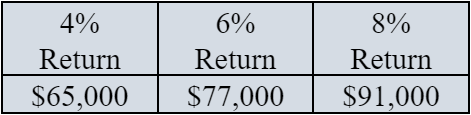
Assume you turn 50 during 2021 and contribute an extra $6,500 to your account for this year, and then you do the same for the subsequent 15 years (for a total of 16 years), up to age 65. Here’s how much extra you could accumulate by that age in your 401(k), 403(b), or 457 account (rounded to the nearest $1,000), assuming the annual rates of return indicated below:

Tax Credits table

These are substantial amounts. Of course, we are talking before-tax numbers here.  

Proof: Make SIMPLE Plan Catch-Up Contributions 

Say you turn 50 during 2021 and contribute an extra $3,000 for this year, and then you do the same for the subsequent 15 years (for a total of 16 years), up to age 65. Here’s how much extra you could accumulate by that age in your SIMPLE plan account (rounded to the nearest $1,000), assuming the annual rates of return indicated below:

table

Not bad! Once again, remember that these are before-tax numbers.  

Proof: Make IRA Catch-Up Contributions 

Say you turn 50 during 2021 and contribute an extra $1,000 for this year, and then you do the same for the subsequent 15 years (for a total of 16 years), up to age 65. Here’s how much extra you could accumulate by that age in your IRA (rounded off to the nearest $1,000), assuming the annual rates of return indicated below:

table

These are before-tax numbers for traditional IRAs but after-tax numbers for Roth IRAs.

If you have questions, don’t hesitate to contact me.


Filed Under: Tax update, Tax-savings Tagged With: Tax Credits, Tax-saving, Tax-saving tips

2021 Year-End Tax-Planning Edition

November 14, 2021 by John Sanchez

2021 Last-Minute Year-End General Business Income Tax Deductions

2021 Last-Minute

Your goal should be to get the IRS to owe you money. Of course, the IRS is not likely to cut you a check for this money (although in the right circumstances, that will happen), but you’ll realize the cash when you pay less in taxes.

Here are six powerful business tax-deduction strategies that you can easily understand and implement before the end of 2021.

  1. Prepay Expenses Using the IRS Safe Harbor

You just have to thank the IRS for its tax-deduction safe harbors. IRS regulations contain a safe-harbor rule that allows cash-basis taxpayers to prepay and deduct qualifying expenses up to 12 months in advance without challenge, adjustment, or change by the IRS.

Under this safe harbor, your 2021 prepayments cannot go into 2023. This makes sense, because you can prepay only 12 months of qualifying expenses under the safe-harbor rule.

For a cash-basis taxpayer, qualifying expenses include lease payments on business vehicles, rent payments on offices and machinery, and business and malpractice insurance premiums.

Example. You pay $3,000 a month in rent and would like a $36,000 deduction this year. So on Friday, December 31, 2021, you mail a rent check for $36,000 to cover all of your 2022 rent. Your landlord does not receive the payment in the mail until Tuesday, January 4, 2022. Here are the results:

  • You deduct $36,000 in 2021 (the year you paid the money).
  • The landlord reports taxable income of $36,000 in 2022 (the year he received the money).

You get what you want—the deduction this year. The landlord gets what he wants—next year’s entire rent in advance, eliminating any collection problems while keeping the rent taxable in the year he expects it to be taxable.

Don’t surprise your landlord: if he had received the $36,000 of rent paid in advance in 2021, he would have had to pay taxes on the rent money in tax year 2021.

  1. Stop Billing Customers, Clients, and Patients

Here is one rock-solid, time-tested, easy strategy to reduce your taxable income for this year: stop billing your customers, clients, and patients until after December 31, 2021. (We assume here that you or your corporation operates on a cash basis and calendar year.)

Customers, clients, patients, and insurance companies generally don’t pay until billed. Not billing customers and patients is a time-tested tax-planning strategy that business owners have used successfully for years.

Example. Jim, a dentist, usually bills his patients and the insurance companies at the end of each week. This year, however, he sends no bills in December. Instead, he gathers up those bills and mails them the first week of January. Presto! He just postponed paying taxes on his December 2021 income by moving that income to 2022.

  1. Buy Office Equipment

With bonus depreciation now at 100 percent along with increased limits for Section 179 expensing, buy your equipment or machinery and place it in service before December 31, and get a deduction for 100 percent of the cost in 2021.

Qualifying bonus depreciation and Section 179 purchases include new and used personal property such as machinery, equipment, computers, desks, chairs, and other furniture (and certain qualifying vehicles).

  1. Use Your Credit Cards

If you are a single-member LLC or sole proprietor filing Schedule C for your business, the day you charge a purchase to your business or personal credit card is the day you deduct the expense. Therefore, as a Schedule C taxpayer, you should consider using your credit card for last-minute purchases of office supplies and other business necessities.

If you operate your business as a corporation, and if the corporation has a credit card in the corporate name, the same rule applies: the date of charge is the date of deduction for the corporation.

But if you operate your business as a corporation and you are the personal owner of the credit card, the corporation must reimburse you if you want the corporation to realize the tax deduction, and that happens on the date of reimbursement. Thus, submit your expense report and have your corporation make its reimbursements to you before midnight on December 31.

  1. Don’t Assume You Are Taking Too Many Deductions

If your business deductions exceed your business income, you have a tax loss for the year. With a few modifications to the loss, tax law calls this a “net operating loss,” or NOL.

If you are just starting your business, you could very possibly have an NOL. You could have a loss year even with an ongoing, successful business.

You used to be able to carry back your NOL two years and get immediate tax refunds from prior years, but the Tax Cuts and Jobs Act (TCJA) eliminated this provision. Now, you can only carry your NOL forward, and it can only offset up to 80 percent of your taxable income in any one future year.

What does all this mean? You should never stop documenting your deductions, and you should always claim all your rightful deductions. We have spoken with far too many business owners, especially new owners, who don’t claim all their deductions when those deductions would produce a tax loss.

  1. Deal with Your Qualified Improvement Property

In the CARES Act, Congress finally fixed the qualified improvement property (QIP) error that it made when enacting the TCJA.

QIP is any improvement made by the taxpayer to the interior portion of a building that is non-residential real property (think office buildings, retail stores, and shopping centers) if you place the improvement in service after the date you place the building in service.

The big deal with QIP is that it’s not considered real property that you depreciate over 39 years. QIP is 15-year property, eligible for immediate deduction using either 100 percent bonus depreciation or Section 179 expensing. To get the QIP deduction in 2021, you need to place the QIP in service on or before December 31, 2021.

Planning note. If you have QIP property on an already filed 2018 or 2019 return that has not been amended, it’s on that return as 39-year property. You need to fix that—and likely add some cash to your bank account because of the fix.

2021 Last-Minute Section 199A Tax Reduction Strategies

Remember to consider your Section 199A deduction in your year-end tax planning.

If you don’t, you could end up with an unsatisfactory $0 for your deduction amount. We’ll review three year-end moves that (a) reduce your income taxes and (b) boost your Section 199A deduction at the same time.

First Things First

If your taxable income is above $164,900 (or $329,800 on a joint return), then your type of business, wages paid, and property can reduce and/or eliminate your Section 199A tax deduction.

If your deduction amount is less than 20 percent of your qualified business income (QBI), then consider using one or more of the strategies described below to increase your Section 199A deduction.

Strategy 1: Harvest Capital Losses

Capital gains add to your taxable income, which is the income that

  • determines your eligibility for the Section 199A tax deduction,
  • sets the upper limit (ceiling) on the amount of your Section 199A tax deduction, and
  • establishes when you need wages and/or property to obtain your maximum deductions.

If the capital gains are hurting your Section 199A deduction, you have time before the end of the year to harvest capital losses to offset those harmful gains.

Strategy 2: Make Charitable Contributions

Since the Section 199A deduction uses taxable income for its thresholds, you can use itemized deductions to reduce and/or eliminate threshold problems and increase your Section 199A deduction.

Charitable contribution deductions are the easiest way to increase your itemized deductions before the end of the year (assuming you already itemize).

Strategy 3: Buy Business Assets

Thanks to 100 percent bonus depreciation and Section 179 expensing, you can write off the entire cost of most assets you buy and place in service before December 31, 2021.

This can help your Section 199A deduction in two ways:

  1. The big asset purchase and write-off can reduce your taxable income and increase your Section 199A deduction when it gets your taxable income under the threshold.
  2. The big asset purchase and write-off can contribute to an increased Section 199A deduction if your Section 199A deduction currently uses the calculation that includes the 2.5 percent of unadjusted basis in your business’s qualified property. In this scenario, your asset purchases increase your qualified property, which in turn increases your 199A deduction.

2021 Last-Minute Year-End Tax Strategies for Your Stock Portfolio

When you take advantage of the tax code’s offset game, your stock market portfolio can represent a little gold mine of opportunities to reduce your 2021 income taxes.

The tax code contains the basic rules for this game, and once you know the rules, you can apply the correct strategies.

Here’s the basic strategy:

  • Avoid the high taxes (up to 40.8 percent) on short-term capital gains and ordinary income.
  • Lower the taxes to zero—or if you can’t do that, then lower them to 23.8 percent or less by making the profits subject to long-term capital gains.

Think of this: you are paying taxes at a 71.4 percent higher rate when you pay at 40.8 percent rather than the tax-favored 23.8 percent.

To avoid the higher rates, here are seven possible tax-planning strategies.

Strategy 1

Examine your portfolio for stocks that you want to unload, and make sales where you offset short-term gains subject to a high tax rate such as 40.8 percent with long-term losses (up to 23.8 percent).

In other words, make the high taxes disappear by offsetting them with low-taxed losses, and pocket the difference.

Strategy 2

Use long-term losses to create the $3,000 deduction allowed against ordinary income.

Again, you are trying to use the 23.8 percent loss to kill a 40.8 percent rate of tax (or a 0 percent loss to kill a 12 percent tax, if you are in the 12 percent or lower tax bracket).

Strategy 3

As an individual investor, avoid the wash-sale loss rule.

Under the wash-sale loss rule, if you sell a stock or other security and purchase substantially identical stock or securities within 30 days before or after the date of sale, you don’t recognize your loss on that sale. Instead, the code makes you add the loss amount to the basis of your new stock.

If you want to use the loss in 2021, then you’ll have to sell the stock and sit on your hands for more than 30 days before repurchasing that stock.

Strategy 4

If you have lots of capital losses or capital loss carryovers and the $3,000 allowance is looking extra tiny, sell additional stocks, rental properties, and other assets to create offsetting capital gains.

If you sell stocks to purge the capital losses, you can immediately repurchase the stock after you sell it—there’s no wash-sale “gain” rule.

Strategy 5

Do you give money to your parents to assist them with their retirement or living expenses? How about children (specifically, children not subject to the kiddie tax)?

If so, consider giving appreciated stock to your parents and your non-kiddie-tax children. Why? If the parents or children are in lower tax brackets than you are, you get a bigger bang for your buck by

  • gifting them stock,
  • having them sell the stock, and then
  • having them pay taxes on the stock sale at their lower tax rates.

Strategy 6

If you are going to make a donation to a charity, consider appreciated stock rather than cash, because a donation of appreciated stock gives you more tax benefit.

It works like this:

  • Benefit 1. You deduct the fair market value of the stock as a charitable donation.
  • Benefit 2. You don’t pay any of the taxes you would have had to pay if you sold the stock.

Example. You bought a publicly traded stock for $1,000, and it’s now worth $11,000. If you give it to a 501(c)(3) charity, the following happens:

  • You get a tax deduction for $11,000.
  • You pay no taxes on the $10,000 profit.

Two rules to know:

  1. Your deductions for donating appreciated stocks to 501(c)(3) organizations may not exceed 30 percent of your adjusted gross income.
  2. If your publicly traded stock donation exceeds the 30 percent, no problem. Tax law allows you to carry forward the excess until used, for up to five years.

Strategy 7

If you could sell a publicly traded stock at a loss, do not give that loss-deduction stock to a 501(c)(3) charity. Why? If you sell the stock, you have a tax loss that you can deduct. If you give the stock to a charity, you get no deduction for the loss—in other words, you miss out on that tax-reducing loss.

2021 Last-Minute Year-End Tax Strategies for Marriage, Kids, and Family

If you are thinking of getting married or divorced, you need to consider December 31, 2021, in your tax planning.

Also, do you give money to family or friends (other than your children, who are subject to the kiddie tax)? If so, you need to consider the zero-taxes planning strategy.

And now, consider your children who are under age 18. Have you paid them for work they’ve done for your business? Have you paid them the right way?

Here are five strategies to consider as we come to the end of 2021.

  1. Put Your Children on Your Payroll

If you have a child under the age of 18 and you operate your business as a Schedule C sole proprietor or as a spousal partnership, you absolutely need to consider having that child on your payroll. Why?

First, neither you nor your child would pay payroll taxes on the child’s income.

Second, with a traditional IRA, the child can avoid all federal income taxes on up to $18,550 in income.

If you operate your business as a corporation, you can still benefit by employing the child even though both your corporation and your child suffer payroll taxes.

  1. Get Divorced after December 31

The marriage rule works like this: you are considered married for the entire year if you are married on December 31.

Although lawmakers have made many changes to eliminate the differences between married and single taxpayers, in most cases the joint return will work to your advantage.

Warning on alimony! The TCJA changed the tax treatment of alimony payments under divorce and separate maintenance agreements executed after December 31, 2018:

  • Under the old rules, the payor deducts alimony payments and the recipient includes the payments in income.
  • Under the new rules, which apply to all agreements executed after December 31, 2018, the payor gets no tax deduction and the recipient does not recognize income.
  1. Stay Single to Increase Mortgage Deductions

Two single people can deduct more mortgage interest than a married couple.

If you own a home with someone other than a spouse, and you bought it on or before December 15, 2017, you individually can deduct mortgage interest on up to $1 million of a qualifying mortgage.

For example, if you and your unmarried partner live together and own the home together, the mortgage ceiling on deductions for the two of you is $2 million. If you get married, the ceiling drops to $1 million.

If you bought your house after December 15, 2017, then the reduced $750,000 mortgage limit from the TCJA applies. In that case, for two single people, the maximum deduction for mortgage interest is based on a ceiling of $1.5 million.

  1. Get Married on or before December 31

Remember, if you are married on December 31, you are married for the entire year.

If you are thinking of getting married in 2022, you might want to rethink that plan for the same reasons that apply in a divorce (as described above). The IRS could make big savings available to you for the 2021 tax year if you get married on or before December 31, 2021.

You have to run the numbers in your tax return both ways to know the tax benefits and detriments for your particular case. But if the numbers work out, a quick trip to the courthouse could save you thousands.

  1. Make Use of the 0 Percent Tax Bracket

In the old days, you used this strategy with your college student. Today, this strategy does not work with the college student, because the kiddie tax now applies to students up to age 24.

But this strategy is a good one, so ask yourself this question: Do I give money to my parents or other loved ones to make their lives more comfortable?

If the answer is yes, is your loved one in the 0 percent capital gains tax bracket? The 0 percent capital gains tax bracket applies to a single person with less than $40,400 in taxable income and to a married couple with less than $80,800 in taxable income.

If the parent or other loved one is in the 0 percent capital gains tax bracket, you can get extra bang for your buck by giving this person appreciated stock rather than cash.

Example. You give Aunt Millie shares of stock with a fair market value of $20,000, for which you paid $2,000. Aunt Millie sells the stock and pays zero capital gains taxes. She now has $20,000 in after-tax cash to spend, which should take care of things for a while.

Had you sold the stock, you would have paid taxes of $4,284 in your tax bracket (23.8 percent x $18,000 gain).

Of course, $5,000 of the $20,000 you gifted goes against your $11.7 million estate tax exemption if you are single. But if you’re married and you made the gift together, you each have a $15,000 gift-tax exclusion, for a total of $30,000, and you have no gift-tax concerns other than the requirement to file a gift-tax return that shows you split the gift.

2021 Last-Minute Year-End Medical Plan Strategies

All small-business owners with one to 49 employees should have a medical plan for their business. Sure, the tax law does not require you to have a plan, but you should.

Most of the tax rules that apply to medical plans are straightforward when you have 49 or fewer employees.

Here are six opportunities for you to consider:

  1. Make sure to claim the federal tax credit equal to 100 percent of required (2020) and voluntary (2021) emergency sick leave and emergency family leave payments. It’s likely that you made payments that qualify for the credits.
  1. If you have a Section 105 plan in place and you have not been reimbursing expenses monthly, do a reimbursement now to get your 2021 deductions, and then put yourself on a monthly reimbursement schedule in 2022.
  2. If you want to implement a Qualified Small Employer Health Reimbursement Arrangement (QSEHRA), make sure to get that done properly now. You are late, so you could suffer that $50-per-employee penalty should you be found out.
  3. But if you are thinking of the QSEHRA and want to help your employees with more money and flexibility, be sure to consider the Individual Coverage Health Reimbursement Arrangement (ICHRA). The ICHRA has more advantages.
  4. If you operate your business as an S corporation and you want an above-the-line tax deduction for the cost of your health insurance, you need the S corporation to (a) pay for or reimburse you for the health insurance, and (b) put it on your W-2. Make sure that the reimbursement happens before December 31 and that you have the reimbursement set up to show on the W-2.
  5. Claim the tax credit for the group health insurance you give your employees. If you provide your employees with group health insurance, see whether your pay structure and number of employees put you in a position to claim a 50 percent tax credit for some or all of the monies you paid for health insurance in 2021 and possibly in prior years.

If you have questions, don’t hesitate to contact me.

Filed Under: Tax update, Tax-savings

  • « Previous Page
  • Page 1
  • …
  • Page 5
  • Page 6
  • Page 7
  • Page 8
  • Page 9
  • …
  • Page 14
  • Next Page »

Primary Sidebar

Archives

  • April 2026
  • March 2026
  • December 2025
  • November 2025
  • October 2025
  • September 2025
  • July 2025
  • June 2025
  • May 2025
  • February 2025
  • January 2025
  • November 2024
  • October 2024
  • August 2024
  • July 2024
  • June 2024
  • May 2024
  • April 2024
  • March 2024
  • January 2024
  • December 2023
  • November 2023
  • October 2023
  • September 2023
  • August 2023
  • June 2023
  • May 2023
  • March 2023
  • February 2023
  • January 2023
  • November 2022
  • October 2022
  • September 2022
  • July 2022
  • June 2022
  • May 2022
  • April 2022
  • March 2022
  • February 2022
  • December 2021
  • November 2021
  • October 2021
  • September 2021
  • June 2021
  • March 2021
  • January 2021
  • December 2020
  • October 2020
  • July 2020
  • May 2020
  • April 2020
  • March 2020
  • December 2019
  • October 2019
  • September 2019
  • August 2019

Categories

  • Bitcoin
  • Business
  • Crypto Taxes
  • Cryptocurrency
  • ERTC
  • Tax Filing Deadline
  • Tax Saving Tips Covid_19
  • Tax savings 2023
  • Tax update
  • Tax-saving tips
  • Tax-savings
  • Uncategorized

Footer

Facebook  Linkedin

Copyright © 2021 · https://www.jsanchezcpa.com/blog