• Skip to content
  • Skip to primary sidebar
  • Skip to footer

Header Right

  • Home
  • About
  • Contact

Tax update

Tax Credits for Schedule C Businesses without Employees

December 13, 2021 by John Sanchez

Tax Credits

Obtaining a tax credit is the next best thing to paying no taxes at all. 

The tax code contains over 30 non-refundable tax credits for businesses. These are part of the general business tax credit and are claimed on IRS Form 3800, General Business Tax Credit, and on Schedule 3 of Form 1040. The general business credit is not itself a tax credit, but rather an overall limitation on the total credits that a business can claim each year.

What if you’re a Schedule C business owner who doesn’t have employees and isn’t involved in one of the niche businesses that come with a credit? You’re not necessarily left out of the tax credit bonanza. Here are six tax credits that many Schedule C businesses with no employees can claim (and of course, you can qualify for these credits with employees, too).

  • Credit for Increasing Research Activities

The credit for increasing research activities is intended to encourage businesses to invest in scientific research and experimental activities. 

Any technological research qualifies, so long as it relates to a product’s new or improved function, performance, reliability, or quality. The research must involve the physical or biological sciences, engineering, or computer science. 

You don’t have to have employees to get this credit, because you can claim the credit for 65 percent of the cost of hiring third parties to perform research activities on your behalf, such as outside contractors, engineering firms, or research institutes. 

If you qualify, calculating the credit is worthwhile.

  1. Qualified Plug-In Electric Drive Motor Vehicle Credit

If you purchase a new electric vehicle, you may be able to claim a credit. These include fully electric vehicles (EVs) and plug-in hybrid EVs (PHEVs).

The maximum credit is $7,500, and the minimum is $2,500. But the actual amount depends on the size of the vehicle’s battery. EVs generally get the maximum $7,500, while PHEVs often qualify for less. For example, a Ford Mustang Mach-E qualifies for a $7,500 credit, while a Subaru Crosstrek Hybrid gets only $4,502. 

Unfortunately, the credit phases out the year after a manufacturer reaches 200,000 total EV car sales in the U.S. 

Tesla and General Motors are the only two manufacturers so far to reach the limit, and the credits for their EVs are now completely phased out. So you won’t get a federal credit if you purchase a Tesla or a Chevy Volt. Toyota and Ford will probably be next to cross the 200,000-EV threshold.

When you claim the credit for a business vehicle, you reduce the vehicle’s depreciable basis by the credit amount. You then depreciate the remaining adjusted basis as you would for any other business vehicle.

  1. Disabled Access Tax Credit

The Americans with Disabilities Act (ADA) prohibits private employers with 15 or more employees from discriminating against people with disabilities in the full and equal enjoyment of goods, services, and facilities offered by any “place of public accommodation”—this includes businesses open to the public.

The disabled access tax credit is designed to help small businesses defray the costs of complying with the ADA. But you don’t have to have employees to claim the credit. The credit may be claimed by any business with either

  • $1 million or less in gross receipts for the preceding tax year, or
  • 30 or fewer full-time employees during the preceding tax year.

The amount of the tax credit is equal to 50 percent of your disabled access expenses that exceed $250 in a year but are not more than $10,250. Thus, the maximum credit is $5,000.

  1. Business Energy Tax Credit

There is a business energy credit based on the cost of qualified energy property used in a trade or business or for the production of income, such as a residential rental building. The credit ranges from 10 percent to 30 percent of the cost of such property. 

The credit can be claimed for various types of renewable energy installations, including thermal and geothermal energy, wind turbines, and fuel cells. 

But small businesses most often claim the credit for the cost of installing solar panels and related equipment to generate electricity to provide illumination, heating, or cooling (or hot water) in a business structure, or to provide solar process heat. 

Unlike the solar credit for homeowners, there is no dollar limit on this business credit. The credit is 26 percent of the cost of solar property whose construction begins in 2020, 2021, or 2022. 

The tax code reduces the credit percentage to 22 percent if construction begins during 2023. 

  1. Rehabilitation Tax Credit

The rehabilitation tax credit helps defray part of the cost of rehabilitating historic old buildings. The credit is available only if you rehab a certified historic building or a building located in a registered historic district. The credit can be claimed for commercial, industrial, agricultural, and residential rental historic buildings.

The secretary of the interior must certify to the secretary of the treasury that the project meets their standards and is a “Certified Rehabilitation.” If your building is not already registered as historic but you think it should be, you can nominate it for historic status by contacting your state historic preservation office. 

  1. New Energy-Efficient Home Credit

If you’re a building contractor who builds homes, there is a tax credit just for you. You can get a credit of up to $2,000 for building an energy-efficient home. 

The credit is available for all new homes, including manufactured homes, built between January 1, 2018, and December 31, 2021. To meet the energy savings requirements, a home must be certified to provide heating and cooling energy savings of 30 percent to 50 percent compared with a federal standard. 

A reduced credit of $1,000 is available for manufactured homes with a heating or cooling consumption at least 30 percent less than a comparable house and with the Energy Star label.

Are More Credits on the Way?

In the news, you have been reading and hearing about the Build Back Better bill that passed the House and is being considered by the Senate. There are lots of tax credits in the bill. But there are three things to know as of December 1, 2021.

  1. The Senate will likely create and try to pass its own version of this bill.
  2. If the Senate passes the bill in a different form, the bill will go to a conference with both House and Senate members, who will make more changes.
  3. Regardless of what happens, we don’t see any changes in the current bill or expect any changes that will affect the information in this newsletter. The changes, if any do become law, will apply to 2022 and later.

Tax Credits for Schedule C Business Owners with Employees

If you hire an employee for your Schedule C business, you can qualify for several valuable tax credits. 

Each credit is different, and certain limitations apply to all or most employer tax credits.

Remember, like we said above, tax credits are the best. They beat deductions. Note the difference below (using the 32 percent bracket): 

  • A $1,000 deduction for wages reduces your income taxes by $320. 
  • A $1,000 credit reduces your taxes by $680 ($1,000 - $320).

Many tax credits are not available if you hire a person related to you, including children, stepchildren, a spouse, parents, siblings, step-siblings, nephews, nieces, uncles, aunts, cousins, or in-laws.

Eight Valuable Tax Credits for Business Owners

Below are listed the eight non-refundable tax credits that Schedule C business owners can claim when they hire employees. 

  1. Work Opportunity Tax Credit (WOTC)

The WOTC rewards employers for hiring employees from groups the IRS has identified as having “consistently faced significant barriers to employment.” 

  1. Family and Medical Leave Credit

Federal law doesn’t require that you give paid leave to your employees who need to take time off for family reasons (such as the birth of a child) or due to their illness or that of a family member. (A few states require some paid leave that’s funded through payroll deductions.) 

But if you choose to provide such paid leave, the federal tax code may reward you with a family and medical leave tax credit. 

  1. Credit for Small Employer Health Insurance Premiums

If you have fewer than 50 full-time-equivalent employees, you are not required to provide your employees with health insurance. But if you elect to do so, you may qualify for the small business health care tax credit. This tax credit is available to eligible employers for two consecutive tax years.

  1. Credit for Small Employer Pension Plan Start-Up Costs

This credit is for the cost of setting up an employee pension plan, including a new 401(k) plan, 403(b) plan, defined benefit plan (a traditional employee pension plan), profit-sharing plan, SIMPLE IRA or SIMPLE 401(k), or SEP-IRA. 

The costs covered by the credit include the expenses to establish and administer the plan and to educate employees about retirement planning.

  1. Credit for Employer-Provided Childcare Facilities and Services

This little-used credit is intended to encourage employers to provide childcare to their employees. There are two ways to get the credit:

  1. Build, acquire, rehabilitate, or expand an on-site childcare facility for your employees’ children, and help pay to operate it.
  2. Contract with a licensed childcare program, including a home-based provider, to provide childcare for your employees.

The second option is more realistic for smaller businesses. Businesses often partner with childcare companies such as the Learning Care Group, Bright Horizons, and KinderCare to offer this benefit.

  1. Empowerment Zone Employment Credit

Is your business located in one of the designated empowerment zones? 

These are areas of high poverty and unemployment identified by the U.S. Department of Housing and Urban Development or the secretary of agriculture. 

You might be surprised about which places the government designates as having high poverty and unemployment. It’s worth checking out.

You can claim a credit equal to 20 percent of the first $15,000 in wages you pay to full- or part-time employees who both live and work in an empowerment zone. Thus, the maximum credit is $3,000 per employee (20 percent x $15,000). The employees must work for you for at least 90 days.

  1. Credit for Employer Differential Wage Payments to Military Personnel

This credit is available if you have an employee in the military reserves who is called to active duty for more than 30 days. If you continue to pay the employee all or part of that employee’s wages while he or she is on active duty, you can claim a credit equal to 20 percent of the payments, up to $20,000.

  1. Indian Employment Credit

This credit is available only if you hire an enrolled member of an American Indian tribe who both lives and works on an Indian reservation. If this is the case, you may claim a tax credit equal to 20 percent of the wages and health insurance benefits you provide the employee. The Indian employment credit ends December 31, 2021.

When Is a Partner in a Partnership a 1099 Worker?

When the individual production activity of a partner is outside his or her capacity as a member of the partnership, the partnership has two choices:

  1. Allocate the production income to the partner, and have the partner treat the expenses as unreimbursed partner expenses (UPE).
  2. Treat the partner as a 1099 independent contractor for the individual production.

Unreimbursed Partner Expenses

As a partner in a partnership, you generally can’t deduct any of the partnership expenses on your individual tax return—the partnership should pay for and deduct its own business expenses.

But if your partnership agreement or business policy forces you as an individual partner to pay for expenses out of pocket, with no reimbursement available, then you can deduct the business expenses in full on your individual tax return as UPE.

Because the UPE is a trade or business expense, it also reduces your self-employment tax. 

Treatment as a 1099 Independent Contractor

The tax code is clear on how this works. IRC Section 707(a)(1) states:

If a partner engages in a transaction with a partnership other than in his capacity as a member of such partnership, the transaction shall, except as otherwise provided in this section, be considered as occurring between the partnership and one who is not a partner.

Thus, under this treatment, you would treat that activity as independent contractor activity and report the income to the partner on IRS Form 1099-NEC, Nonemployee Compensation.

The partnership agreement should clearly define how it will treat a partner’s individual production.

Make Extra “Catch-Up” Contributions to Retirement Accounts

After reaching age 50, you can make additional “catch-up” contributions to certain types of tax-advantaged retirement accounts. For the 2021 tax year, this opportunity is available if you’ll be age 50 or older on Friday, December 31, 2021.

Specifically, with an employer-sponsored 401(k), 403(b), 457, or SIMPLE plan, you can make extra salary-reduction catch-up contributions to your account—assuming the plan allows catch-up contributions. 

If you are self-employed and have set up a 401(k) plan or SIMPLE IRA for yourself, you can also make extra catch-up contributions to your account.  

Finally, you can make extra catch-up contributions to a traditional or Roth IRA. 

These catch-up contributions can carry a hefty punch because they are above and beyond the “regular” annual contribution limits that otherwise apply. 

The following table shows maximum allowable catch-up contributions for the 2021 tax year:

Tax Credits table

If you’re married and both you and your spouse are age 50 or older, the amounts shown above can potentially be doubled, assuming both spouses have accounts set up in their respective names. 

But with an employer-sponsored plan, maximum salary-reduction catch-up contributions to your account might be less than the indicated amounts—depending on employee participation levels and the terms of the plan. 

The Question: How Much Are Catch-Up Contributions Worth?

This is where it gets interesting. While some folks eagerly embrace any chance to contribute more money to tax-advantaged retirement accounts, others might need some encouragement. Those in the latter category may dismiss catch-up contributions as inconsequential unless proven otherwise. Fair enough. So let’s prove otherwise.

Proof: Make 401(k), 403(b), or 457 Plan Catch-Up Contributions 

Assume you turn 50 during 2021 and contribute an extra $6,500 to your account for this year, and then you do the same for the subsequent 15 years (for a total of 16 years), up to age 65. Here’s how much extra you could accumulate by that age in your 401(k), 403(b), or 457 account (rounded to the nearest $1,000), assuming the annual rates of return indicated below:

Tax Credits table

These are substantial amounts. Of course, we are talking before-tax numbers here.  

Proof: Make SIMPLE Plan Catch-Up Contributions 

Say you turn 50 during 2021 and contribute an extra $3,000 for this year, and then you do the same for the subsequent 15 years (for a total of 16 years), up to age 65. Here’s how much extra you could accumulate by that age in your SIMPLE plan account (rounded to the nearest $1,000), assuming the annual rates of return indicated below:
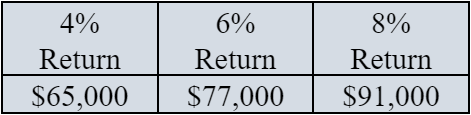
table

Not bad! Once again, remember that these are before-tax numbers.  

Proof: Make IRA Catch-Up Contributions 

Say you turn 50 during 2021 and contribute an extra $1,000 for this year, and then you do the same for the subsequent 15 years (for a total of 16 years), up to age 65. Here’s how much extra you could accumulate by that age in your IRA (rounded off to the nearest $1,000), assuming the annual rates of return indicated below:

table

These are before-tax numbers for traditional IRAs but after-tax numbers for Roth IRAs.

If you have questions, don’t hesitate to contact me.


Filed Under: Tax update, Tax-savings Tagged With: Tax Credits, Tax-saving, Tax-saving tips

2021 Year-End Tax-Planning Edition

November 14, 2021 by John Sanchez

2021 Last-Minute Year-End General Business Income Tax Deductions

2021 Last-Minute

Your goal should be to get the IRS to owe you money. Of course, the IRS is not likely to cut you a check for this money (although in the right circumstances, that will happen), but you’ll realize the cash when you pay less in taxes.

Here are six powerful business tax-deduction strategies that you can easily understand and implement before the end of 2021.

  1. Prepay Expenses Using the IRS Safe Harbor

You just have to thank the IRS for its tax-deduction safe harbors. IRS regulations contain a safe-harbor rule that allows cash-basis taxpayers to prepay and deduct qualifying expenses up to 12 months in advance without challenge, adjustment, or change by the IRS.

Under this safe harbor, your 2021 prepayments cannot go into 2023. This makes sense, because you can prepay only 12 months of qualifying expenses under the safe-harbor rule.

For a cash-basis taxpayer, qualifying expenses include lease payments on business vehicles, rent payments on offices and machinery, and business and malpractice insurance premiums.

Example. You pay $3,000 a month in rent and would like a $36,000 deduction this year. So on Friday, December 31, 2021, you mail a rent check for $36,000 to cover all of your 2022 rent. Your landlord does not receive the payment in the mail until Tuesday, January 4, 2022. Here are the results:

  • You deduct $36,000 in 2021 (the year you paid the money).
  • The landlord reports taxable income of $36,000 in 2022 (the year he received the money).

You get what you want—the deduction this year. The landlord gets what he wants—next year’s entire rent in advance, eliminating any collection problems while keeping the rent taxable in the year he expects it to be taxable.

Don’t surprise your landlord: if he had received the $36,000 of rent paid in advance in 2021, he would have had to pay taxes on the rent money in tax year 2021.

  1. Stop Billing Customers, Clients, and Patients

Here is one rock-solid, time-tested, easy strategy to reduce your taxable income for this year: stop billing your customers, clients, and patients until after December 31, 2021. (We assume here that you or your corporation operates on a cash basis and calendar year.)

Customers, clients, patients, and insurance companies generally don’t pay until billed. Not billing customers and patients is a time-tested tax-planning strategy that business owners have used successfully for years.

Example. Jim, a dentist, usually bills his patients and the insurance companies at the end of each week. This year, however, he sends no bills in December. Instead, he gathers up those bills and mails them the first week of January. Presto! He just postponed paying taxes on his December 2021 income by moving that income to 2022.

  1. Buy Office Equipment

With bonus depreciation now at 100 percent along with increased limits for Section 179 expensing, buy your equipment or machinery and place it in service before December 31, and get a deduction for 100 percent of the cost in 2021.

Qualifying bonus depreciation and Section 179 purchases include new and used personal property such as machinery, equipment, computers, desks, chairs, and other furniture (and certain qualifying vehicles).

  1. Use Your Credit Cards

If you are a single-member LLC or sole proprietor filing Schedule C for your business, the day you charge a purchase to your business or personal credit card is the day you deduct the expense. Therefore, as a Schedule C taxpayer, you should consider using your credit card for last-minute purchases of office supplies and other business necessities.

If you operate your business as a corporation, and if the corporation has a credit card in the corporate name, the same rule applies: the date of charge is the date of deduction for the corporation.

But if you operate your business as a corporation and you are the personal owner of the credit card, the corporation must reimburse you if you want the corporation to realize the tax deduction, and that happens on the date of reimbursement. Thus, submit your expense report and have your corporation make its reimbursements to you before midnight on December 31.

  1. Don’t Assume You Are Taking Too Many Deductions

If your business deductions exceed your business income, you have a tax loss for the year. With a few modifications to the loss, tax law calls this a “net operating loss,” or NOL.

If you are just starting your business, you could very possibly have an NOL. You could have a loss year even with an ongoing, successful business.

You used to be able to carry back your NOL two years and get immediate tax refunds from prior years, but the Tax Cuts and Jobs Act (TCJA) eliminated this provision. Now, you can only carry your NOL forward, and it can only offset up to 80 percent of your taxable income in any one future year.

What does all this mean? You should never stop documenting your deductions, and you should always claim all your rightful deductions. We have spoken with far too many business owners, especially new owners, who don’t claim all their deductions when those deductions would produce a tax loss.

  1. Deal with Your Qualified Improvement Property

In the CARES Act, Congress finally fixed the qualified improvement property (QIP) error that it made when enacting the TCJA.

QIP is any improvement made by the taxpayer to the interior portion of a building that is non-residential real property (think office buildings, retail stores, and shopping centers) if you place the improvement in service after the date you place the building in service.

The big deal with QIP is that it’s not considered real property that you depreciate over 39 years. QIP is 15-year property, eligible for immediate deduction using either 100 percent bonus depreciation or Section 179 expensing. To get the QIP deduction in 2021, you need to place the QIP in service on or before December 31, 2021.

Planning note. If you have QIP property on an already filed 2018 or 2019 return that has not been amended, it’s on that return as 39-year property. You need to fix that—and likely add some cash to your bank account because of the fix.

2021 Last-Minute Section 199A Tax Reduction Strategies

Remember to consider your Section 199A deduction in your year-end tax planning.

If you don’t, you could end up with an unsatisfactory $0 for your deduction amount. We’ll review three year-end moves that (a) reduce your income taxes and (b) boost your Section 199A deduction at the same time.

First Things First

If your taxable income is above $164,900 (or $329,800 on a joint return), then your type of business, wages paid, and property can reduce and/or eliminate your Section 199A tax deduction.

If your deduction amount is less than 20 percent of your qualified business income (QBI), then consider using one or more of the strategies described below to increase your Section 199A deduction.

Strategy 1: Harvest Capital Losses

Capital gains add to your taxable income, which is the income that

  • determines your eligibility for the Section 199A tax deduction,
  • sets the upper limit (ceiling) on the amount of your Section 199A tax deduction, and
  • establishes when you need wages and/or property to obtain your maximum deductions.

If the capital gains are hurting your Section 199A deduction, you have time before the end of the year to harvest capital losses to offset those harmful gains.

Strategy 2: Make Charitable Contributions

Since the Section 199A deduction uses taxable income for its thresholds, you can use itemized deductions to reduce and/or eliminate threshold problems and increase your Section 199A deduction.

Charitable contribution deductions are the easiest way to increase your itemized deductions before the end of the year (assuming you already itemize).

Strategy 3: Buy Business Assets

Thanks to 100 percent bonus depreciation and Section 179 expensing, you can write off the entire cost of most assets you buy and place in service before December 31, 2021.

This can help your Section 199A deduction in two ways:

  1. The big asset purchase and write-off can reduce your taxable income and increase your Section 199A deduction when it gets your taxable income under the threshold.
  2. The big asset purchase and write-off can contribute to an increased Section 199A deduction if your Section 199A deduction currently uses the calculation that includes the 2.5 percent of unadjusted basis in your business’s qualified property. In this scenario, your asset purchases increase your qualified property, which in turn increases your 199A deduction.

2021 Last-Minute Year-End Tax Strategies for Your Stock Portfolio

When you take advantage of the tax code’s offset game, your stock market portfolio can represent a little gold mine of opportunities to reduce your 2021 income taxes.

The tax code contains the basic rules for this game, and once you know the rules, you can apply the correct strategies.

Here’s the basic strategy:

  • Avoid the high taxes (up to 40.8 percent) on short-term capital gains and ordinary income.
  • Lower the taxes to zero—or if you can’t do that, then lower them to 23.8 percent or less by making the profits subject to long-term capital gains.

Think of this: you are paying taxes at a 71.4 percent higher rate when you pay at 40.8 percent rather than the tax-favored 23.8 percent.

To avoid the higher rates, here are seven possible tax-planning strategies.

Strategy 1

Examine your portfolio for stocks that you want to unload, and make sales where you offset short-term gains subject to a high tax rate such as 40.8 percent with long-term losses (up to 23.8 percent).

In other words, make the high taxes disappear by offsetting them with low-taxed losses, and pocket the difference.

Strategy 2

Use long-term losses to create the $3,000 deduction allowed against ordinary income.

Again, you are trying to use the 23.8 percent loss to kill a 40.8 percent rate of tax (or a 0 percent loss to kill a 12 percent tax, if you are in the 12 percent or lower tax bracket).

Strategy 3

As an individual investor, avoid the wash-sale loss rule.

Under the wash-sale loss rule, if you sell a stock or other security and purchase substantially identical stock or securities within 30 days before or after the date of sale, you don’t recognize your loss on that sale. Instead, the code makes you add the loss amount to the basis of your new stock.

If you want to use the loss in 2021, then you’ll have to sell the stock and sit on your hands for more than 30 days before repurchasing that stock.

Strategy 4

If you have lots of capital losses or capital loss carryovers and the $3,000 allowance is looking extra tiny, sell additional stocks, rental properties, and other assets to create offsetting capital gains.

If you sell stocks to purge the capital losses, you can immediately repurchase the stock after you sell it—there’s no wash-sale “gain” rule.

Strategy 5

Do you give money to your parents to assist them with their retirement or living expenses? How about children (specifically, children not subject to the kiddie tax)?

If so, consider giving appreciated stock to your parents and your non-kiddie-tax children. Why? If the parents or children are in lower tax brackets than you are, you get a bigger bang for your buck by

  • gifting them stock,
  • having them sell the stock, and then
  • having them pay taxes on the stock sale at their lower tax rates.

Strategy 6

If you are going to make a donation to a charity, consider appreciated stock rather than cash, because a donation of appreciated stock gives you more tax benefit.

It works like this:

  • Benefit 1. You deduct the fair market value of the stock as a charitable donation.
  • Benefit 2. You don’t pay any of the taxes you would have had to pay if you sold the stock.

Example. You bought a publicly traded stock for $1,000, and it’s now worth $11,000. If you give it to a 501(c)(3) charity, the following happens:

  • You get a tax deduction for $11,000.
  • You pay no taxes on the $10,000 profit.

Two rules to know:

  1. Your deductions for donating appreciated stocks to 501(c)(3) organizations may not exceed 30 percent of your adjusted gross income.
  2. If your publicly traded stock donation exceeds the 30 percent, no problem. Tax law allows you to carry forward the excess until used, for up to five years.

Strategy 7

If you could sell a publicly traded stock at a loss, do not give that loss-deduction stock to a 501(c)(3) charity. Why? If you sell the stock, you have a tax loss that you can deduct. If you give the stock to a charity, you get no deduction for the loss—in other words, you miss out on that tax-reducing loss.

2021 Last-Minute Year-End Tax Strategies for Marriage, Kids, and Family

If you are thinking of getting married or divorced, you need to consider December 31, 2021, in your tax planning.

Also, do you give money to family or friends (other than your children, who are subject to the kiddie tax)? If so, you need to consider the zero-taxes planning strategy.

And now, consider your children who are under age 18. Have you paid them for work they’ve done for your business? Have you paid them the right way?

Here are five strategies to consider as we come to the end of 2021.

  1. Put Your Children on Your Payroll

If you have a child under the age of 18 and you operate your business as a Schedule C sole proprietor or as a spousal partnership, you absolutely need to consider having that child on your payroll. Why?

First, neither you nor your child would pay payroll taxes on the child’s income.

Second, with a traditional IRA, the child can avoid all federal income taxes on up to $18,550 in income.

If you operate your business as a corporation, you can still benefit by employing the child even though both your corporation and your child suffer payroll taxes.

  1. Get Divorced after December 31

The marriage rule works like this: you are considered married for the entire year if you are married on December 31.

Although lawmakers have made many changes to eliminate the differences between married and single taxpayers, in most cases the joint return will work to your advantage.

Warning on alimony! The TCJA changed the tax treatment of alimony payments under divorce and separate maintenance agreements executed after December 31, 2018:

  • Under the old rules, the payor deducts alimony payments and the recipient includes the payments in income.
  • Under the new rules, which apply to all agreements executed after December 31, 2018, the payor gets no tax deduction and the recipient does not recognize income.
  1. Stay Single to Increase Mortgage Deductions

Two single people can deduct more mortgage interest than a married couple.

If you own a home with someone other than a spouse, and you bought it on or before December 15, 2017, you individually can deduct mortgage interest on up to $1 million of a qualifying mortgage.

For example, if you and your unmarried partner live together and own the home together, the mortgage ceiling on deductions for the two of you is $2 million. If you get married, the ceiling drops to $1 million.

If you bought your house after December 15, 2017, then the reduced $750,000 mortgage limit from the TCJA applies. In that case, for two single people, the maximum deduction for mortgage interest is based on a ceiling of $1.5 million.

  1. Get Married on or before December 31

Remember, if you are married on December 31, you are married for the entire year.

If you are thinking of getting married in 2022, you might want to rethink that plan for the same reasons that apply in a divorce (as described above). The IRS could make big savings available to you for the 2021 tax year if you get married on or before December 31, 2021.

You have to run the numbers in your tax return both ways to know the tax benefits and detriments for your particular case. But if the numbers work out, a quick trip to the courthouse could save you thousands.

  1. Make Use of the 0 Percent Tax Bracket

In the old days, you used this strategy with your college student. Today, this strategy does not work with the college student, because the kiddie tax now applies to students up to age 24.

But this strategy is a good one, so ask yourself this question: Do I give money to my parents or other loved ones to make their lives more comfortable?

If the answer is yes, is your loved one in the 0 percent capital gains tax bracket? The 0 percent capital gains tax bracket applies to a single person with less than $40,400 in taxable income and to a married couple with less than $80,800 in taxable income.

If the parent or other loved one is in the 0 percent capital gains tax bracket, you can get extra bang for your buck by giving this person appreciated stock rather than cash.

Example. You give Aunt Millie shares of stock with a fair market value of $20,000, for which you paid $2,000. Aunt Millie sells the stock and pays zero capital gains taxes. She now has $20,000 in after-tax cash to spend, which should take care of things for a while.

Had you sold the stock, you would have paid taxes of $4,284 in your tax bracket (23.8 percent x $18,000 gain).

Of course, $5,000 of the $20,000 you gifted goes against your $11.7 million estate tax exemption if you are single. But if you’re married and you made the gift together, you each have a $15,000 gift-tax exclusion, for a total of $30,000, and you have no gift-tax concerns other than the requirement to file a gift-tax return that shows you split the gift.

2021 Last-Minute Year-End Medical Plan Strategies

All small-business owners with one to 49 employees should have a medical plan for their business. Sure, the tax law does not require you to have a plan, but you should.

Most of the tax rules that apply to medical plans are straightforward when you have 49 or fewer employees.

Here are six opportunities for you to consider:

  1. Make sure to claim the federal tax credit equal to 100 percent of required (2020) and voluntary (2021) emergency sick leave and emergency family leave payments. It’s likely that you made payments that qualify for the credits.
  1. If you have a Section 105 plan in place and you have not been reimbursing expenses monthly, do a reimbursement now to get your 2021 deductions, and then put yourself on a monthly reimbursement schedule in 2022.
  2. If you want to implement a Qualified Small Employer Health Reimbursement Arrangement (QSEHRA), make sure to get that done properly now. You are late, so you could suffer that $50-per-employee penalty should you be found out.
  3. But if you are thinking of the QSEHRA and want to help your employees with more money and flexibility, be sure to consider the Individual Coverage Health Reimbursement Arrangement (ICHRA). The ICHRA has more advantages.
  4. If you operate your business as an S corporation and you want an above-the-line tax deduction for the cost of your health insurance, you need the S corporation to (a) pay for or reimburse you for the health insurance, and (b) put it on your W-2. Make sure that the reimbursement happens before December 31 and that you have the reimbursement set up to show on the W-2.
  5. Claim the tax credit for the group health insurance you give your employees. If you provide your employees with group health insurance, see whether your pay structure and number of employees put you in a position to claim a 50 percent tax credit for some or all of the monies you paid for health insurance in 2021 and possibly in prior years.

If you have questions, don’t hesitate to contact me.

Filed Under: Tax update, Tax-savings

529 withdrawals and more tax-saving tips

October 15, 2021 by John Sanchez

Taxation of 529 College Savings Account Withdrawals

529 withdrawals

The big advantage of 529 plans is that qualified withdrawals are always federal-income-tax-free—and usually state-income-tax-free too.

What you may not know is that not all 529 withdrawals are tax-free qualified withdrawals, even in years when you have heavy college costs.

Here are six important points to know about 529 withdrawals.

Point No. 1: You Usually Have Several Payment Options

Say you are the 529 account owner or plan participant. Plans commonly use both terms to describe the person who established and controls the account. This letter will use account owner.

As the account owner, you can generally have a withdrawal check cut in your own name or have an electronic deposit made into your own account.

Alternatively, you can have a withdrawal issued in the name of the account beneficiary (the college student for whom you set up the 529 account, usually a child or grandchild) or issued directly to the educational institution for the benefit of the account beneficiary.

You choose your payment option by submitting a withdrawal request to the 529 plan.

Point No. 2: Watch Out for Withdrawals from 529 Accounts Funded with Custodial Account Money

Say you funded the 529 account with money that came from a custodial account that was set up for the account beneficiary—your child or grandchild—under your state’s Uniform Gift to Minors Act (UGMA) or Uniform Transfer to Minors Act (UTMA).

In this situation, you must use any money taken from the custodial account for the benefit of the child or grandchild.

You can’t take a 529 account withdrawal for yourself if the 529 account was funded with money from a child’s or grandchild’s custodial account. Because the money in the 529 account came from the custodial account, the 529 account money legally belongs to your child or grandchild, not you.

On the other hand, if you funded the 529 account with your own money, the money in the account is fair game. You can take withdrawals and do whatever you want with them—subject to the potential federal income tax implications explained later.

Point No. 3: The IRS Knows about Withdrawals

For any year that a 529 withdrawal is taken, the plan must issue a Form 1099-Q, Payments From Qualified Education Programs (Under Sections 529 and 530), by February 1 of the following year.

If the withdrawal goes to the 529 account beneficiary (your child or grandchild), the 1099-Q goes to him or her. If the withdrawal goes to you as the account owner, the 1099-Q goes to you.

Either way, the IRS gets a copy, so the IRS knows what happened.

Point No. 4: Withdrawals May Be Taxable Even in Years When Substantial College Costs Are Incurred

When the Form 1099-Q shows withdrawn earnings, the IRS becomes interested in the 1099-Q recipient’s Form 1040 because some or all of the earnings might be taxable. Here’s the deal on that.

Withdrawn earnings are always federal-income-tax-free and penalty-free when total withdrawals for the year do not exceed what the IRS calls the account beneficiary’s adjusted qualified education expenses, or AQEE, for the year.

AQEE equals the sum of the 529 account beneficiary’s

  • college tuition and related fees;
  • room and board (but only if the beneficiary carries at least half of a full-time course load);
  • required books, supplies, and equipment;
  • computer hardware and peripherals, software, and internet access costs; and
  • expenses for special needs services.

Next, you must subtract any federal-income-tax-free educational assistance to calculate the account beneficiary’s AQEE.

According to the IRS, tax-free educational assistance includes costs covered by

  • tax-free Pell grants;
  • tax-free scholarships, fellowships, and tuition discounts;
  • tax-free veterans’ educational assistance;
  • an employer’s tax-free educational assistance program under Internal Revenue Code Section 127; and
  • any other tax-free educational assistance (other than assistance received in the form of a gift or an inheritance).

In addition, tax-free educational assistance includes any costs used to claim the American Opportunity tax credit or the Lifetime Learning tax credit.

Key point. You can also include in AQEE

  • up to $10,000 annually for the account beneficiary’s K-12 tuition costs;
  • the account beneficiary’s fees, books, supplies, and equipment required to participate in a registered apprenticeship program; and
  • interest and principal payments on qualified student loan debt owed by the account beneficiary or a sibling of the account beneficiary—subject to a $10,000 lifetime limit.

Bottom line. When withdrawals during the year exceed AQEE for the year, all or part of the withdrawn earnings will be taxable. When withdrawals don’t exceed AQEE, all the withdrawn earnings are federal-income-tax-free.

Point No. 5: When You Keep a Withdrawal, There Are Tax Consequences

Assuming the 529 account was funded with your own money (as opposed to money from a custodial account), you are free to change the 529 account beneficiary to yourself and then take federal-income-tax-free withdrawals to cover your own AQEE if you decide to go back to school.

But if you take a withdrawal that you use for purposes other than education, report the taxable portion of any related account earnings as miscellaneous income on your Form 1040. Taxable amounts may also get hit with a 10 percent penalty tax to boot (see below).

Finally, if you liquidate a loser 529 account (worth less than the total amount of contributions), there are no federal income tax consequences. (The government stopped participating in your losses for tax years 2018-2025.)

Point No. 6: Withdrawals Not Used for Education Can Also Be Hit with a 10 Percent Penalty Tax

As explained earlier, some or all of the earnings included in a 529 withdrawal taken during the year must be included in gross income when the withdrawn earnings exceed the account beneficiary’s AQEE for the year. But there’s more.

According to the general rule, the taxable amount of earnings is also hit with a 10 percent penalty tax.

But the 10 percent penalty tax doesn’t apply to earnings that are taxable only because the account beneficiary’s AQEE was reduced by

  • tax-free Pell grants;
  • tax-free scholarships, fellowships, and tuition discounts;
  • tax-free veterans’ educational assistance;
  • tax-free employer-provided educational assistance;
  • any other tax-free educational assistance; or
  • costs used to claim the American Opportunity or Lifetime Learning tax credit.

In addition, the 10 percent penalty tax doesn’t apply to earnings withdrawn when the account beneficiary attends one of the U.S. military academies (such as West Point, Annapolis, or the Air Force Academy).

Finally, the 10 percent penalty tax doesn’t apply to earnings withdrawn after the account beneficiary dies or becomes disabled.

Tax-Home Rules You Should Know

When you travel out of town overnight, you need to know the tax-home rule. The IRS defines your tax home, and it’s not necessarily in the same town where you have your personal residence.

If you have more than one business location, one of the locations will be your tax home. It’s generally your main place of business.

In determining your main place of business, the IRS takes into account three factors:

  1. the length of time you spend at each location for business purposes;
  2. the degree of business activity in each area; and
  3. the relative financial return from each area.

Here’s a recent court case that illustrates this rule.

Akeem Soboyede, an immigration attorney, was licensed to practice law in both Minnesota and Washington, D.C., and he maintained solo law practices in both Minneapolis and Washington, D.C.

Although Mr. Soboyede’s primary personal residence was in Minneapolis, he divided his time between his office in Minneapolis and his office in Washington, D.C.

Get ready for a chuckle: in court, Mr. Soboyede admitted in his testimony that he did not keep the necessary documentation because he “did not know . . . [he] was going to get audited.”

Due to the lack of records, the IRS disallowed most of the deductions. The remaining issue for the court was the travel expenses for lodging, for which Mr. Soboyede had the records.

The court noted that Mr. Soboyede’s lodging expenses were only deductible if he was “away from home” as required by Section 162(a)(2).

In deciding whether Mr. Soboyede’s tax home was in Minneapolis or Washington, D.C., the court used the following two factors:

  • Where did he spend more of his time?
  • Where did he derive a greater proportion of his income?

Answer: Washington, D.C. Think about this: He had his home in Minneapolis, but the court ruled that his “tax home” was in Washington, D.C. As a result, he lost his travel deductions.

Principal Residence Gain Exclusion Break

Here’s a look at how to apply the $250,000 ($500,000, if married) principal residence tax break when getting married or divorced, or when converting another property into your home.

In both marriage and divorce situations, a home sale often occurs. Of course, the principal residence gain exclusion break can come in very handy when an appreciated home is put on the block.

Sale during Marriage

Say a couple gets married. They each own separate residences from their single days. After the marriage, the pair files jointly. In this scenario, it is possible for each spouse to individually pass the ownership and use tests for their respective residences. Each spouse can then take advantage of a separate $250,000 exclusion.

Sale before Divorce

Say a soon-to-be-divorced couple sells their principal residence. Assume they still are legally married as of the end of the year of sale because their divorce is not yet final. In this scenario, the divorcing couple can shelter up to $500,000 of home sale profit in two different ways:

  1. Joint return. The couple could file a joint Form 1040 for the year of sale. Assuming they meet the timing requirements, they can claim the $500,000 joint-filer exclusion.
  2. Separate returns. Alternatively, the couple could file separate returns for the year of sale, using married-filing-separately status. Assuming the home is owned jointly or as community property, each spouse can then exclude up to $250,000 of his or her share of the gain.

To qualify for two separate $250,000 exclusions, each spouse must have

  • owned his or her part of the property for at least two years during the five-year period ending on the sale date, and
  • used the home as his or her principal residence for at least two years during that five-year period.

Sale in Year of Divorce or Later

When a couple is divorced as of the end of the year in which their principal residence is sold, they are considered divorced for that entire year. Therefore, they will be unable to file jointly for the year of sale. The same is true, of course, when the sale occurs after the year of divorce.

Key point. Under the preceding rules, both ex-spouses will typically qualify for separate $250,000 gain exclusions when the home is sold soon after the divorce. But when the property remains unsold for some time, the ex-spouse who no longer resides there will eventually fail the two-out-of-five-years use test and become ineligible for the gain exclusion privilege.

Let’s see how we can avoid that unpleasant outcome.

When the Non-Resident Ex Continues to Own the Home for Years after Divorce

Sometimes ex-spouses will continue to co-own the former marital abode for a lengthy period after the divorce. Of course, only one ex-spouse will continue to live in the home. After three years of being out of the house, the non-resident ex will fail the two-out-of-five-years use test. That means when the home is finally sold, the non-resident ex’s share of the gain will be fully taxable.

But with some advance planning, you can prevent this undesirable outcome.

If you will be the non-resident ex, your divorce papers should stipulate that as a condition of the divorce agreement,

  • your ex-spouse is allowed to continue to occupy the home for as long as he or she wants, or
  • until the kids reach a certain age, or
  • for a specified number of years, or
  • for whatever time period you and your soon-to-be ex can agree on.

At that point, either the home can be put up for sale, with the proceeds split per the divorce agreement, or one ex can buy out the other’s share for current fair market value.

This arrangement allows you, as the non-resident ex, to receive “credit” for your ex’s continued use of the property as a principal residence. So, when the home is finally sold, you should pass the two-out-of-five-years use test and thereby qualify for the $250,000 gain exclusion privilege.

The same strategy works when you wind up with complete ownership of the home after the divorce, but your ex continues to live there. Stipulating as a condition of the divorce that your ex is allowed to continue to live in the home ensures that you, as the non-resident ex, will qualify for the $250,000 gain exclusion when the home is eventually sold.

Little-Known Non-Excludable Gain Rule Can Mean Unexpectedly Higher Taxes on a Property Converted into Your Principal Residence

Once upon a time, you could convert a rental property or vacation home into your principal residence, occupy it for at least two years, sell it, and take full advantage of the home sale gain exclusion privilege of $250,000 for unmarried individuals or $500,000 for married, joint-filing couples. Those were the good old days!

Unfortunately, legislation enacted back in 2008 included an unfavorable provision for personal residence sales that occur after that year. The provision can make a portion of your gain from selling an affected residence ineligible for the gain exclusion privilege.

Let’s call the amount of gain that is made ineligible the non-excludable gain. The non-excludable gain amount is calculated as follows.

Step 1. Take the total gain, and subtract any gain from depreciation deductions claimed against the property for periods after May 6, 1997. Include the gain from depreciation (so-called unrecaptured Section 1250 gain) in your taxable income. Carry the remaining gain to Step 3.

Step 2. Calculate the non-excludable gain fraction.

The numerator of the fraction is the amount of time after 2008 during which the property is not used as your principal residence. These times are called periods of non-qualified use.

But periods of non-qualified use don’t include temporary absences that aggregate two years or less due to changes of employment, health conditions, or other circumstances specified in IRS guidance.

Periods of non-qualified use also don’t include times when the property is not used as your principal residence, if those times are

  • after the last day of use as your principal residence, and
  • within the five-year period ending on the sale date.

The denominator of the fraction is your total ownership period for the property.

Step 3. Calculate the non-excludable gain by multiplying the gain from Step 1 by the non-excludable gain fraction from Step 2.

Step 4. Report on Schedule D of Form 1040 the non-excludable gain calculated in Step 3. Also report any Step 1 unrecaptured Section 1250 gain from depreciation for periods after May 6, 1997. The remaining gain is eligible for the gain exclusion privilege, assuming you meet the timing requirements.

The Basics of Depreciation

Are you thinking about buying personal property (such as a car, a computer, or other equipment) or real property (such as a building)? If you use the property for personal purposes, it’s not deductible.

But if you use it in a business, you can deduct the full cost using regular depreciation, bonus depreciation, or IRC Section 179 expensing.

Regular depreciation takes three to 39 years depending on the property involved, while bonus depreciation allows you to deduct 100 percent of the cost of personal property in one year through 2022. Up to $1,050,000 of personal property may also be deducted in one year under IRC Section 179.

But depreciation won’t begin if you purchase property with the intent of beginning a new business. You must actually be in business to claim depreciation. This doesn’t require that you make sales or earn profits—only that your business is a going concern.

Also, depreciation doesn’t begin the moment you purchase property for your business. It begins only when you place property in service in your business. You don’t have to use the property to place it in service, but the property must be available for use in your active business. This could occur after you purchase the property.

Finally, if you use regular depreciation, you must apply rules called conventions to determine the month in which your depreciation deduction begins. The earlier in the year, the larger your deduction for the first year.

The default rule is that regular depreciation for personal property begins July 1 the first year (mid-year convention). But if you purchase 40 percent or more of your total personal property for the year during the fourth quarter, your depreciation begins at the midpoint of the quarter in which it is placed in service (mid-quarter convention).

First-year depreciation for real property begins at the middle of the month during which the property is placed in service (mid-month convention).

If you have questions, don’t hesitate to contact me.

 

Filed Under: Tax Saving Tips Covid_19, Tax update, Tax-savings Tagged With: 529 withdrawals, tax, Tax-saving, Tax-saving tips, Tax-Saving Tips COVID-19

Tax-saving tips September Update

September 20, 2021 by John Sanchez

Tax-saving

Save Your Employee Retention Credit

In what clearly must have been a mistake, the IRS issued Notice 2021-49 to deny the employee retention credit (ERC) on the wages paid to most C and S corporation owners.

According to the IRS:

  • Your corporation can qualify for the ERC on the wages paid to a more than 50 percent owner of an S or C corporation if that owner does not have any living brothers and sisters (whether whole- or half-blood), spouse, ancestors, or lineal descendants.
  • Your corporation cannot qualify for the ERC on the more than 50 percent owner’s wages if one of those relatives (other than the spouse) is alive.

Example 1. Tom owns 100 percent of his S corporation, and he has no living relatives. Under this new IRS notice, Tom’s corporation can qualify for up to $33,000 in ERC on Tom’s wages.

Example 2. John owns 100 percent of his S corporation, but he has one living relative, a two-year-old daughter. John’s corporation does not qualify for the ERC. Under the new IRS notice, the two-year-old daughter owns by attribution 100 percent of the S corporation, and the IRS says that John, now a tainted relative, works for her and does not qualify for the ERC.

Whoa, that’s not logical!

Also, it may be technically incorrect.

And it’s possible that lawmakers will kill this IRS rule.

To Amend or Not to Amend

Let’s start with this premise. You are a more than 50 percent owner of a corporation. You thought that your corporation qualified for the ERC. At various times before August 4, 2021, the day when the IRS issued Notice 2021-49, you filed your claim to the ERC for 2020 and the first two quarters of 2021.

As we mentioned, when you filed, you believed (as a more than 50 percent owner of a C or S corporation) that wages paid to you by the corporation qualified for the ERC. We did too.

But then, on August 4, 2021, the IRS issued Notice 2021-49 and said no—you don’t qualify. What now? Here’s what we think you should do:

  1. Do nothing now. There’s no hurry. You have until April 15, 2024, before you have to do anything about your 2020 ERC.
  2. Don’t claim the ERC for the more than 50 percent corporate owner for calendar year 2021 quarters 3 and 4 until you have clarification that you qualify. Again, there’s no hurry. You can file a Form 941-X anytime within the three-year statute of limitations.

If you are upset by this IRS notice, it’s a good idea to communicate that dissatisfaction to your U.S. senators and congressional representatives. For some ideas on what message to convey, here’s a sample letter for your use.

Vaccinated? Claim Tax Credits for Your Employees and Yourself

Vaccinated - Tax-saving

As the nation suffers from the ravages of the super-contagious COVID-19 Delta variant, the federal government desperately wants all American workers and their families to get vaccinated.

If you have employees, you probably feel the same way. Indeed, more and more employers are implementing vaccine mandates—a trend that will likely grow after the FDA gives final approval to the COVID-19 vaccines.

COVID-19 vaccine mandates are highly controversial.

One thing that’s not controversial is giving your employees paid time off to get vaccinated and to deal with the possible side effects of vaccination (usually, short-lived flu-like symptoms). The federal government does not require that employers provide such paid time off, but it strongly encourages them to do so. And it’s putting its money where its mouth is, by providing fairly generous tax credits to repay employers for the lost employee work time.

You can also collect these credits if your employees take time off to help family and household members get the vaccination and/or recover from its side effects. There’s only one thing better than having an employee vaccinated: having an employee’s entire family vaccinated.

How big are the credits?

  • Employers who give employees paid time off to get vaccinated against COVID-19 and/or recover from the vaccination can collect a sick leave credit of up to $511 per day for 10 days, plus a family leave credit of up to $200 per day for 60 additional days.
  • Employers who give employees paid time off to help household members get vaccinated and/or recover from the vaccination can get a sick leave credit for 10 days and family leave credit for 60 days, both capped at $200 per day.

What if you are self-employed and have no employees? You haven’t been left out. Similar tax credits are available to self-employed individuals who take time off from work to get vaccinated or who help family or household members do so.

But you must act soon. These sick leave and family leave credits are available only through September 30, 2021.

One more thing: these are refundable tax credits. This means you collect the full amount even if it exceeds your tax liability. Employers can reduce their third-quarter 2021 payroll tax deposits in the amount of their credits. If the credit exceeds these deposits, employers can get paid the difference in advance by filing IRS Form 7200, Advance Payment of Employer Credits Due to COVID-19.

The documentation requirements for these credits are modest, and you’ll have to file a couple of new forms with your 2021 tax return.

IRS Private Letter Rulings: Are They Worth It?

Do you have a question about how to apply the tax law to a potential transaction? Wouldn’t it be great if you could get the IRS to give you an answer in advance of filing your tax return?

You may be able to do so by obtaining a private letter ruling (PLR) from the IRS.

You get a PLR by filing a request with the IRS National Office. The IRS is ordinarily bound by the answer it gives a taxpayer in a PLR. But PLRs may not be relied on by other taxpayers.

This sounds great in theory—but in practice, seeking a PLR is usually not a good idea.

There are many reasons why:

  • PLRs are expensive. The filing fee is $3,000 for the smallest businesses. Larger businesses must pay as much as $38,000. You’ll also need professional help to prepare a detailed PLR request.
  • A PLR may not be necessary. The IRS has automatic or simplified methods for obtaining its consent without a PLR for many common situations, including late S corporation elections, late IRA rollovers, and various changes in accounting method.
  • PLRs are unavailable for many types of tax questions, including those that (a) are under IRS examination, (b) were clearly answered in the past, or (c) are too fact intensive.
  • PLRs can take a long time to obtain—six months or more for complex questions.
  • PLRs can backfire. Even if the IRS issues a favorable PLR, you now will be on the agency’s radar, which may increase your chances of an audit.

Given all these drawbacks, you should seek a PLR only when a cheaper alternative is unavailable—for example, when you need to do a late IRA rollover and don’t qualify for the streamlined IRS procedure.

In some instances, it’s wise to seek advance IRS approval of complex transactions involving substantial money. Obtaining a favorable PLR in such a case would assure you the transaction passes IRS muster. But these instances are rare.

Prorated Principal Residence Gain Exclusion Break

Here’s good news. IRS regulations allow you to claim a prorated (reduced) gain exclusion—a percentage of the $250,000 or $500,000 exclusion in select circumstances.

The prorated gain exclusion equals the full $250,000 or $500,000 figure (whichever would otherwise apply) multiplied by a fraction.

The numerator of this fraction is the shorter of

  • the aggregate period of time you owned and used the property as your principal residence during the five-year period ending on the sale date, or
  • the period between the last sale for which you claimed an exclusion and the sale date for the home currently being sold.

The denominator for this fraction is two years, or the equivalent in months or days.

When you qualify for the prorated exclusion, it might be big enough to shelter the entire gain from the premature sale. But the prorated exclusion loophole is available only when your premature sale is due primarily to

  • a change in place of employment,
  • health reasons, or
  • specified unforeseen circumstances.

Example. You’re a married joint-filer. You’ve owned and used a home as your principal residence for 11 months. Assuming you qualify under one of the conditions listed above, your prorated joint gain exclusion is $229,167 ($500,000 × 11/24). Hopefully that will be enough to avoid any federal income tax hit from the sale.

Premature Sale Due to Employment Change

Per IRS regulations, you’re eligible for the prorated gain exclusion privilege whenever a premature home sale is primarily due to a change in place of employment for any qualified individual.

“Qualified individual” means

  1. the taxpayer (that would be you),
  2. the taxpayer’s spouse,
  3. any co-owner of the home, or
  4. any person whose principal residence is within the taxpayer’s household.

In addition, almost any close relative of a person listed above also counts as a qualified individual. And any descendent of the taxpayer’s grandparent (such as a first cousin) also counts as a qualified individual.

A premature sale is automatically considered to be primarily due to a change in place of employment if any qualified individual passes the following distance test: the distance between the new place of employment/self-employment and the former residence (the property that is being sold) is at least 50 miles more than the distance between the former place of employment/self-employment and the former residence.

Premature Sale Due to Health Reasons

Per IRS regulations, you are also eligible for the prorated gain exclusion privilege whenever a premature sale is primarily due to health reasons. You pass this test if your move is to

  • obtain, provide, or facilitate the diagnosis, cure, mitigation, or treatment of disease, illness, or injury of a qualified individual, or
  • obtain or provide medical or personal care for a qualified individual who suffers from a disease, an illness, or an injury.

A premature sale is automatically considered to be primarily for health reasons whenever a doctor recommends a change of residence for reasons of a qualified individual’s health (meaning to obtain, provide, or facilitate care, as explained above). If you fail the automatic qualification, your facts and circumstances must indicate that the premature sale was primarily for reasons of a qualified individual’s health.

You cannot claim a prorated gain exclusion for a premature sale that is merely beneficial to the general health or well-being of a qualified individual.

Premature Sale Due to Other Unforeseen Circumstances

Per IRS regulations, a premature sale is generally considered to be due to unforeseen circumstances if the primary reason for the sale is the occurrence of an event that you could not have reasonably anticipated before purchasing and occupying the residence.

But a premature sale that is primarily due to a preference for a different residence or an improvement in financial circumstances will not be considered due to unforeseen circumstances, unless the safe-harbor rule applies.

Under the safe-harbor rule, a premature sale is deemed to be due to unforeseen circumstances if any of the following events occur during your ownership and use of the property as your principal residence:

  • Involuntary conversion of the residence
  • A natural or man-made disaster or acts of war or terrorism resulting in a casualty to the residence
  • Death of a qualified individual
  • A qualified individual’s cessation of employment, making him or her eligible for unemployment compensation
  • A qualified individual’s change in employment or self-employment status that results in the taxpayer’s inability to pay housing costs and reasonable basic living expenses for the taxpayer’s household
  • A qualified individual’s divorce or legal separation under a decree of divorce or separate maintenance
  • Multiple births resulting from a single pregnancy of a qualified individual

If you have questions, don’t hesitate to contact me.

Filed Under: Business, Tax Saving Tips Covid_19, Tax update, Tax-savings

COVID-19 Tax Relief Measures

March 24, 2021 by John Sanchez

COVID-19 Tax Relief Measures

The Coronavirus Aid, Relief, and Economic Security Act (CARES Act) made many temporary changes in the tax law. The new Consolidated Appropriations Act (CAA) adjusted some of these and left others to die on December 31, 2020.

Below are insights into some of the changes.

Borrow $100,000 from Your IRA and Pay It Back within Three Years with No Tax Consequences

Thanks to the CARES Act, IRA owners who were adversely affected by the COVID-19 pandemic were eligible to take tax-favored coronavirus-related distributions (CRDs) from their IRAs during 2020—but only during 2020.

You could take as much as $100,000. You can then recontribute a CRD back into your IRA within three years of the withdrawal date and treat the withdrawal and later recontribution as a federal-income-tax-free rollover.

In effect, the CRD drill allowed you to borrow up to $100,000 from your IRA(s) and then recontribute (repay) the amount(s) at any time up to three years later, with no federal income tax consequences when all is said and done. There are no limitations on what you can use CRD funds for during the three years.

Status report. The CAA does not extend the CRD deal beyond 2020, but it clarifies that similar tax rules can apply to IRA distributions taken by folks who are affected by specified future disasters.

Suspension of Retirement Account Required Minimum Distributions

In normal times, you must begin taking annual required minimum distributions (RMDs) from traditional IRAs and tax-deferred retirement plan accounts after you reach age 72 (or age 70 1/2 if you turned 70 1/2 before 2020). The CARES Act suspended RMDs for calendar year 2020 as a COVID-19 tax relief measure, but only for that one year.

Status report. So far, lawmakers have not extended this deal.

Small-Employer Tax Credits to Cover Required COVID-19-Related Employee Paid Leave

The Families First Coronavirus Response Act (FFCRA) granted a federal tax credit to small employers to cover mandatory payments to employees who take time off under the FFCRA’s COVID-19-related emergency sick-leave and family-leave provisions.

Specifically, a small employer could collect a tax credit equal to 100 percent of qualified emergency sick-leave and family-leave payments made by the employer pursuant to the FFCRA. But the credit under the FFCRA covers only leave payments made between April 1, 2020, and December 31, 2020. Equivalent tax credit relief was available to self-employed individuals who took qualified leave between those dates.

Status report. The FFCRA expired by its terms on December 31, 2020. But the COVID-Related Tax Relief Act of 2020 (contained within the CAA) extends the small-employer credit to cover leave payments made between January 1, 2021, and March 31, 2021, that fall within the FFCRA framework.

There is no requirement for small employers to provide emergency sick-leave or family-leave payments after December 31, 2020. But between January 1, 2021, and March 31, 2021, employers can choose to make voluntary leave payments that fall within the FFCRA framework and can collect the credit if they do so.

Equivalent tax credit relief is available to self-employed individuals who take qualified leave between January 1, 2021, and March 31, 2021.

Liberalized Business Net Operating Loss Deduction Rules

Business activities that generate tax losses can cause you or your business entity to have a net operating loss (NOL) for the year. The CARES Act significantly loosened the NOL deduction rules and allows a five-year carryback for NOLs that arose in tax years 2018-2020.

So, an NOL that arose in 2020 can be carried back to 2015. NOL carrybacks allow you to claim refunds for taxes paid in the carryback years. Because tax rates were higher in pre-2018 years, NOLs carried back to those years can result in hefty tax refunds.

Status report. The CAA does nothing for NOLs that arise in tax years beginning in 2021—you can carry them forward only.

Suspension of Excess Business Loss Disallowance Rule

Before the CARES Act relief, the Tax Cuts and Jobs Act (TCJA) disallowed so-called excess business losses incurred by individuals in tax years beginning in 2018-2025. The TCJA defined an excess business loss as a loss that exceeds $250,000, or $500,000 for a married joint-filing couple. The $250,000 and $500,000 limits are adjusted annually for inflation.

The CARES Act suspended the excess business loss disallowance rule for losses that arose in tax years beginning in 2018-2020.

Status report. The CAA does nothing for excess business losses that arise in tax years beginning in 2021. As things stand, you effectively treat a 2021 excess business loss as an NOL that you can carry forward to future years.

Business Tax Breaks Thanks to the Recently Enacted CAA

When you operate a business, you have a variety of tax breaks available.

The recently enacted CAA extends and expands some of the breaks. We bring the following selection of them to your attention as a tax-strategy buffet.

  • You can deduct 100 percent of your business meals that are provided by restaurants in 2021 and 2022.
  • For hiring members of 10 targeted groups, you can obtain the work opportunity tax credit for first-year wages through 2025.
  • You can now qualify for the 39 percent new markets tax credit for investments through 2025.
  • The empowerment zone tax breaks that were scheduled to expire on December 31, 2020, are extended through 2025, but the new law terminates, for 2021 and later, both (a) the enhanced first-year depreciation rules and (b) the capital gains tax deferral break.
  • Employers may continue through 2025 making Section 127 education plan payments that cover student loan principal and interest up to the plan maximum of $5,250.
  • For residential rental property that you placed in service before 2018 and were depreciating over 40 years under the straight-line method, you can now use 30 years if you elect out of the TCJA business interest expense limitations.
  • Farmers may elect a two-year NOL carryback rather than the five-year carryback retroactively, as if this change were in the original CARES Act.
  • The $1.80 per-square-foot or $0.60 per-square-foot deductions for energy-efficient improvements to commercial buildings are now permanent.
  • Small Business Administration Economic Injury Disaster Loan advances and loan repayment assistance are not taxable, and you suffer no tax attribute reductions as a result of the tax-free monies.
  • Manufacturers of residential homes can claim a credit of $1,000 or $2,000 for homes that meet applicable energy-efficiency standards through 2021.
  • Your business can claim a business federal income tax credit for up to 30 percent of the cost of installing non-hydrogen alternative-fuel vehicle refueling equipment (say, for your employees’ electric vehicles) through 2021.
  • Your business can claim a federal income tax credit for buying vehicles propelled by chemically combining oxygen with hydrogen to create electricity, through 2021 (credits range from $4,000 to $40,000).
  • The new law extends the seven-year recovery period to cover motorsports entertainment complex property placed in service through 2025.
  • You can elect to claim the first-year write-off for the cost of qualified film, television, and theatrical productions commencing before 2025, subject to a $15 million per-production limit or a $20 million limit for productions in certain disadvantaged areas.
  • For racehorses that are no more than two years old that you place in service during 2021, you may use three-year depreciation.

Deducting Disaster Losses for Individuals

We seem to be living in an age of natural disasters. Floods, fires, hurricanes, tornados, and other disasters often dominate the news.

If a disaster strikes you, the tax law may help. When defined as such by the tax code, a disaster loss may qualify for deduction from your taxable income. The rules for personal losses are complex and far more restrictive than for business losses.

Only Casualty Losses Are Deductible

Damage to personal property caused by a disaster is deductible only if it qualifies as a casualty loss. A casualty is damage to, destruction of, or loss of property from events such as fires and floods that are sudden, unexpected, or unusual.

The disaster must result in physical damage to property, so economic losses due to the COVID-19 pandemic do not qualify as a casualty loss.

Many, but not all, casualty losses are covered by insurance. The insurance recovery reduces your tax-deductible loss and could result in a taxable gain.

And here’s a possible nasty surprise. Say you have a deductible loss after reducing the loss by the insurance recovery. If you want to deduct the loss on your taxes, you must file a timely insurance claim, even if that insurance claim will result in the cancellation of your policy or an increase in premiums.

Your casualty loss (not your deduction) is equal to the lesser of

  1. the decrease in the property’s fair market value after the disaster, or
  2. the property’s adjusted basis before the disaster (usually its cost).

Subtract any insurance or other reimbursement from the lesser of these two options. To find the decline in the property’s fair market value, you can use an appraisal or the repair costs.

Limits on Casualty Losses

Unfortunately, you can’t deduct all your casualty losses. From 2018 through 2025, you can deduct personal casualty losses only due to a federally declared disaster or to the extent you have casualty gains.

For example, a homeowner can claim a casualty loss if a wildfire (declared a federal disaster) destroys his home. But he gets no deduction if a faulty fireplace caused the fire and destroys his home (no federal disaster).

The law imposes major limits on your casualty-loss deduction. The general rule says that you first reduce the loss by $100 and deduct the remaining loss only to the extent it exceeds 10 percent of your adjusted gross income (AGI). Your final hurdle is that claim the loss as an itemized deduction. These rules significantly reduce or even eliminate many casualty loss deductions.

Fortunately, some casualty losses are not subject to these limits, including disaster losses sustained due to a federally declared major disaster from January 1, 2020, to February 25, 2021. Instead, losses from such disasters are subject to a $500 floor with no 10-percent-of-AGI reduction. Under this rule, you deduct the loss whether or not you itemize. If you don’t itemize, you add the deductible loss to your standard deduction.

You have a choice for losses from a federal disaster: claim the loss in the year of the disaster or on the prior year’s return if it’s before October 15. This can result in a quick refund of all or part of the tax you paid that year.

Casualty Gains

If all this is not complicated enough, there’s one further wrinkle. A casualty such as a fire can result in a casualty gain instead of a casualty loss when the insurance proceeds you receive exceed the property’s adjusted basis (cost).

A casualty gain is taxable. But you may deduct casualty losses from the gains. Here, you don’t need a federal disaster. Also, you can postpone tax on a casualty gain by buying replacement property.

Deducting Disaster Losses for Businesses

Disasters such as storms, fires, floods, and hurricanes damage or destroy property.

If property such as an office building, rental property, a business vehicle, or business furniture is damaged or destroyed in a disaster, your business may qualify for a casualty loss deduction. It’s easier to deduct business casualty losses than personal losses, but the rules are complex.

What Business Casualty Losses Are Deductible

Disasters such as fires and floods can result in a “casualty” because the damage, destruction, or property loss is from a sudden, unexpected, or unusual event.

Car accidents qualify as a casualty so long as they’re not caused by your willful act or willful negligence. Losses due to thefts and vandalism can also qualify.

Insurance covers many casualty losses. You must reduce your casualty loss by the amount of any insurance you receive or expect to receive. But unlike with a personal loss, you are not required to file an insurance claim for a business casualty loss. You may wish not to do so if it will result in your policy’s cancellation or an increase in premiums.

Amount of Business Casualty Loss

Your casualty loss can never exceed the adjusted basis of the property involved—usually its cost plus the value of any improvements, minus all deductions you took for the property, including depreciation or Section 179 expensing. If your adjusted basis is zero, you get no casualty loss deduction and could have a casualty gain.

The amount of your casualty loss for damaged property is equal to the smaller of

  1. the decrease in the property’s fair market value after the disaster, or
  2. the property’s adjusted basis before the disaster.

Subtract any insurance or other reimbursement received from the smaller of these two options.

You can use an appraisal or repair costs to figure the decline in the property’s fair market value. If a casualty destroys business property, the loss is equal to the property’s adjusted basis minus salvage value and insurance proceeds, if any.

Unlike personal casualty losses, business casualty losses are not subject to either (a) the $100 floor or (b) the 10-percent-of-AGI threshold to be deductible.

Business Casualty Losses Due to Federal Disasters

If your casualty loss is due to a federally declared disaster, you have the option of deducting it in the prior year. This way, you can get a refund of all or part of the tax you paid for that year.

Casualty Gains

You’ll have a casualty gain if the insurance proceeds you receive exceed the property’s adjusted basis (cost).

A casualty gain is taxable. But you can postpone tax on a casualty gain by buying replacement property of equal or greater value within two years (four years for federal disasters).

Repair Costs

Repairs of property damaged by a casualty are not part of the casualty loss deduction. You capitalize the cost of the repairs and add them to your basis in the damaged property. But then they may qualify for depreciation or Section 179 expensing.

If you have more questions, feel free to contact us.

Filed Under: Tax Saving Tips Covid_19, Tax update, Tax-savings

Tax-Saving Tips

December 15, 2020 by John Sanchez

December 2020

Husband and wife working together with laptop, tax savings

Good News If Your PPP Loan Is for $50,000 or Less

As you likely know by now, the Paycheck Protection Program (PPP) loan and its forgiveness process have been an ever-changing (and often confusing) ride so far.

With the new rules for PPP loans of $50,000 or less, you escape the most difficult part of the loan forgiveness if you had to consider employees. And you may even obtain more loan forgiveness than you would have otherwise.

Before

Before the $50,000-or-less rule, you had to either suffer a reduction in loan forgiveness or meet one of the many exceptions that allowed you to

  • cut annual salaries or hourly wages by more than 25 percent, and/or
  • reduce the average number of employees or average hours paid.

After

Now, with a PPP loan of $50,000 or less, you don’t have to consider the myriad rules about employees. Regardless of what you did with your employees, you qualify for full forgiveness if

  • your PPP loan is for $50,000 or less,
  • you spent the PPP money on costs that are eligible for forgiveness, and
  • at least 60 percent of the forgiveness is for qualified payroll costs (including defined payroll for owners).

Example. You obtain a PPP loan of $34,000 based on your 2019 Schedule C income and pay to your part-time employee. When COVID-19 hit, you laid off your part-time worker and have not rehired him. Using SBA Form 3508S and the 24-week covered period, you qualify for 100 percent forgiveness of your $34,000 loan because you spent $20,833 (61 percent) on the deemed payroll to yourself and the remainder on five months’ rent and utilities.

Planning note. You are not an employee of your Schedule C business. You receive no W-2 income. But the PPP rules deem your 2019 Schedule C profits as your payroll for PPP loan purposes. The rules cap the Schedule C taxpayer’s loan amount and forgiveness at a maximum of $20,833 when Schedule C income is $100,000 or more.

Four Things to Know When Hiring Your Spouse

Husband and wife working together with laptop, tax savingsIf you own your own business and operate as a proprietorship or partnership (wherein your spouse is not a partner), one of the smartest tax moves you can make is hiring your spouse to work as your employee.

But the tax savings may be a mirage if you don’t pay your spouse the right way. And the arrangement is subject to attack by the IRS if your spouse is not a bona fide employee.

Here are four things you should know before you hire your spouse that will maximize your savings and minimize the audit risk.

  1. Pay benefits, not wages. The way to save on taxes is to pay your spouse with tax-free employee benefits, not taxable wages. Benefits such as health insurance are fully deductible by you as a business expense, but not taxable income for your spouse.

Also, if you pay a spouse only with tax-free fringe benefits, you need not pay payroll taxes, file employment tax returns, or file a W-2 for your spouse.

  1. Establish a medical reimbursement arrangement. The most valuable fringe benefit you can provide your spouse-employee is reimbursement for health insurance and uninsured medical expenses. You can accomplish this through a 105-HRA plan if your spouse is your sole employee, or an Individual Coverage Health Reimbursement Account (ICHRA) if you have multiple employees.
  2. Provide benefits in addition to health coverage. There are many other tax-free fringe benefits you can provide your spouse in addition to health insurance, including education related to your business, up to $50,000 of life insurance, and de minimis fringes such as gifts.
  1. Treat your spouse as a bona fide employee. For your arrangement to withstand IRS scrutiny, you must be able to prove that your spouse is your bona fide employee. You’ll have no problem if:
  • you are the sole owner of your business,
  • your spouse does real work under your direction and control and keeps a timesheet,
  • you regularly pay your spouse’s medical and other reimbursable expenses from your separate business checking account, and
  • your spouse’s compensation is reasonable for the work performed.

New IRS Efforts to Destroy Tax Deductions for PPP Paid Expenses

From what we know, when lawmakers originally passed the PPP they thought that under its provisions,

  • you did not pay taxes on the forgiveness amount, and
  • you also could deduct the expenses that you paid with the PPP money.

Obstacle

In late April, the IRS issued Notice 2020-32, which asserts that PPP loan recipients may not deduct business expenses paid using the PPP monies that gave rise to forgiveness (defined payroll, rent, utilities, and interest).

Lawmakers’ Take

In a letter to Secretary of the Treasury Steven Mnuchin on May 5, 2020, Senator Chuck Grassley (chairman of the Committee on Finance), Senator Ron Wyden (ranking member on the Committee on Finance), and Congressman Richard E. Neal (chairman of the Committee on Ways and Means) jointly stated that the IRS got this wrong and that the intent of the CARES Act was for the PPP to be a tax-free grant.

The Do-Nothings

The IRS was unmoved by the lawmakers’ letter. The IRS position was clear: no deduction for the expenses paid with the PPP money. The IRS understood that perhaps lawmakers didn’t mean that to happen, but in the eyes of the IRS, the way that the lawmakers enacted the law created the problem. To fix it, lawmakers simply need to pass a new law.

Frankly, we thought that lawmakers would pass a new law and take care of this problem. But no, that has not happened.

New Nails in the Coffin

On November 18, 2020, the IRS drove two new nails into the coffin regarding deductions for PPP monies that were forgiven and spent on payroll, rent, interest, or utilities.

  • Nail 1. In Revenue Ruling 2020-27, the IRS ruled that you may not deduct expenses paid with the PPP loan monies if you have received or expect to receive forgiveness of those loan monies.
  • Nail 2. In Revenue Procedure 2020-51, the IRS set forth safe-harbor procedures to follow if your PPP forgiveness is subsequently denied or if you decide not to apply for forgiveness.

With the rulings described above, the IRS has clarified its position to lawmakers: if you don’t like the non-deductibility of expenses paid with PPP monies, change the law.

What to Do Now

Join with hundreds of thousands of business taxpayers and tax professionals who are urging lawmakers to fix the non-deductibility issue.

To help encourage the action you desire (whether you’re for or against deductibility), get in touch with the lawmakers.

  • 3612 is the Senate bill to make the PPP forgiveness money used to pay business expenses tax-deductible. To express your yea or nay on S. 3612, contact your senators. You can find them at this link: https://www.senate.gov/senators/contact.
  • R. 6821 is the House bill to make the PPP forgiveness money used to pay business expenses tax-deductible. To express your yea or nay on H.R. 6821, contact your representative. You can find him or her at this link: https://www.house.gov/representatives.

Your yea or nay doesn’t need to be long or formal. You can fax, email, or phone and simply say you support or oppose the bill. It’s that easy—and it’s effective. Do it.

The IRS Goes Easy on Taxpayers Who Owe Back Taxes

Are you one of the over 11 million Americans who owe the IRS back taxes? The IRS temporarily suspended most collection efforts during the first wave of the coronavirus pandemic through its “People First Initiative.” This initiative expired July 15, 2020.

The IRS is now ready to go after delinquent accounts again. However, the agency recognizes that substantial numbers of taxpayers cannot pay what they owe right now. To help them, it has promulgated a new Taxpayer Relief Initiative.

The new Taxpayer Relief Initiative is relatively modest in scope, but it can be a big help if you owe the IRS.

Among other things, the new initiative gives you an extra 60 days to pay off a tax bill. You now have 180 days instead of 120 days to make a lump sum payment of all you owe.

The initiative also makes it easier to obtain, keep, and modify installment agreements with the IRS. These allow you to make monthly payments over several years.

If you owe $50,000 to $250,000, you may even be able to obtain an installment agreement without the IRS filing a tax lien on your property—something that has never been possible before.

The IRS is also stressing that it will help taxpayers who have already entered into installment agreements or offers in compromise with the agency and who are now having trouble making their payments.

You may also be able to get IRS penalties reduced or eliminated.

Whatever you do, don’t ignore a tax bill from the IRS. And never feel you’re helpless when confronted by the IRS collection juggernaut. You always have options, no matter how much you owe.

Tax-Smart College Savings Strategies for Parents

Parents Tax savingsCollege is expensive. Data for the 2019–2020 academic year indicates that the average cost of tuition, fees, room, and board was $30,500. The tax law has provisions to help you cover the costs, including Coverdell accounts, Section 529 savings plans, and Section 529 tuition plans.

Contribute to a Coverdell Education Savings Account

You can contribute up to $2,000 per year to the child’s Coverdell Education Savings Account (CESA). If you have several children, you can set up a CESA for each of them.

Contributions are non-deductible, but earnings are allowed to accumulate free of any federal income tax. You can then take tax-free withdrawals to pay for the account beneficiary’s post-secondary tuition, fees, books, supplies, and room and board.

Maybe not for you. Your right to contribute is phased out between modified adjusted gross income (MAGI) of $95,000 and $110,000 if you are unmarried, or between $190,000 and $220,000 if you are a married joint filer.

Contribute to a Section 529 College Savings Plan

Section 529 college savings plans are state-sponsored arrangements named after the section of our beloved Internal Revenue Code that authorizes very favorable treatment under the federal income and gift tax rules.

You as the parent of a college-bound child begin by making contributions into a trust fund set up by the state plan that you choose. The money goes into an account designated for the beneficiary whom you specify (your college-bound child).

You can then make contributions via a lump-sum pay-in or via installment pay-ins stretching over several years. The plan then invests the money using the investment direction option that you select.

When your child reaches college age, you can take federal-income-tax-free withdrawals to pay eligible college expenses, including room and board under most plans. Plans will generally cover expenses at any accredited college or university in the country (not just schools within the state sponsoring the plan). Community colleges qualify as well.

In essence, a Section 529 college savings plan account is a tax-advantaged way to build up a college fund for your child.

Don’t Confuse Savings Plans with Prepaid Plans

Don’t mix up Section 529 college savings plans with Section 529 prepaid college tuition plans—which we will give only a brief mention here. Both types of plans are properly called “Section 529 plans” because both are authorized by that section of the Internal Revenue Code. Both receive the same favorable federal tax treatment. But that’s where the resemblance ends.

The big distinction is that prepaid tuition plans lock in the cost to attend certain colleges. In other words, the rate of return on a prepaid tuition plan account is promised to match the inflation rate for costs to attend the designated school or schools—nothing more, nothing less. That’s okay if that’s what you really want.

No Kiddie Tax on Section 529 Plan

You don’t have to worry about the kiddie tax if you set up a custodial 529 plan in the child’s name. The 529 plan is an investment plan where the monies remain in the plan. You make contributions with after-tax dollars.

When the child takes the money out of the plan for college, he or she does so tax-free when the funds are used to pay for qualified higher education expenses.

If you have more questions, feel free to contact us.

Filed Under: Business, Tax Saving Tips Covid_19, Tax update Tagged With: Tax-saving tips, Tax-Saving Tips COVID-19

  • « Previous Page
  • Page 1
  • …
  • Page 3
  • Page 4
  • Page 5
  • Page 6
  • Next Page »

Primary Sidebar

Archives

  • December 2025
  • November 2025
  • October 2025
  • September 2025
  • July 2025
  • June 2025
  • May 2025
  • February 2025
  • January 2025
  • November 2024
  • October 2024
  • August 2024
  • July 2024
  • June 2024
  • May 2024
  • April 2024
  • March 2024
  • January 2024
  • December 2023
  • November 2023
  • October 2023
  • September 2023
  • August 2023
  • June 2023
  • May 2023
  • March 2023
  • February 2023
  • January 2023
  • November 2022
  • October 2022
  • September 2022
  • July 2022
  • June 2022
  • May 2022
  • April 2022
  • March 2022
  • February 2022
  • December 2021
  • November 2021
  • October 2021
  • September 2021
  • June 2021
  • March 2021
  • January 2021
  • December 2020
  • October 2020
  • July 2020
  • May 2020
  • April 2020
  • March 2020
  • December 2019
  • October 2019
  • September 2019
  • August 2019

Categories

  • Bitcoin
  • Business
  • Crypto Taxes
  • Cryptocurrency
  • ERTC
  • Tax Filing Deadline
  • Tax Saving Tips Covid_19
  • Tax savings 2023
  • Tax update
  • Tax-saving tips
  • Tax-savings
  • Uncategorized

Footer

Facebook  Linkedin

Copyright © 2020 · https://www.jsanchezcpa.com/blog